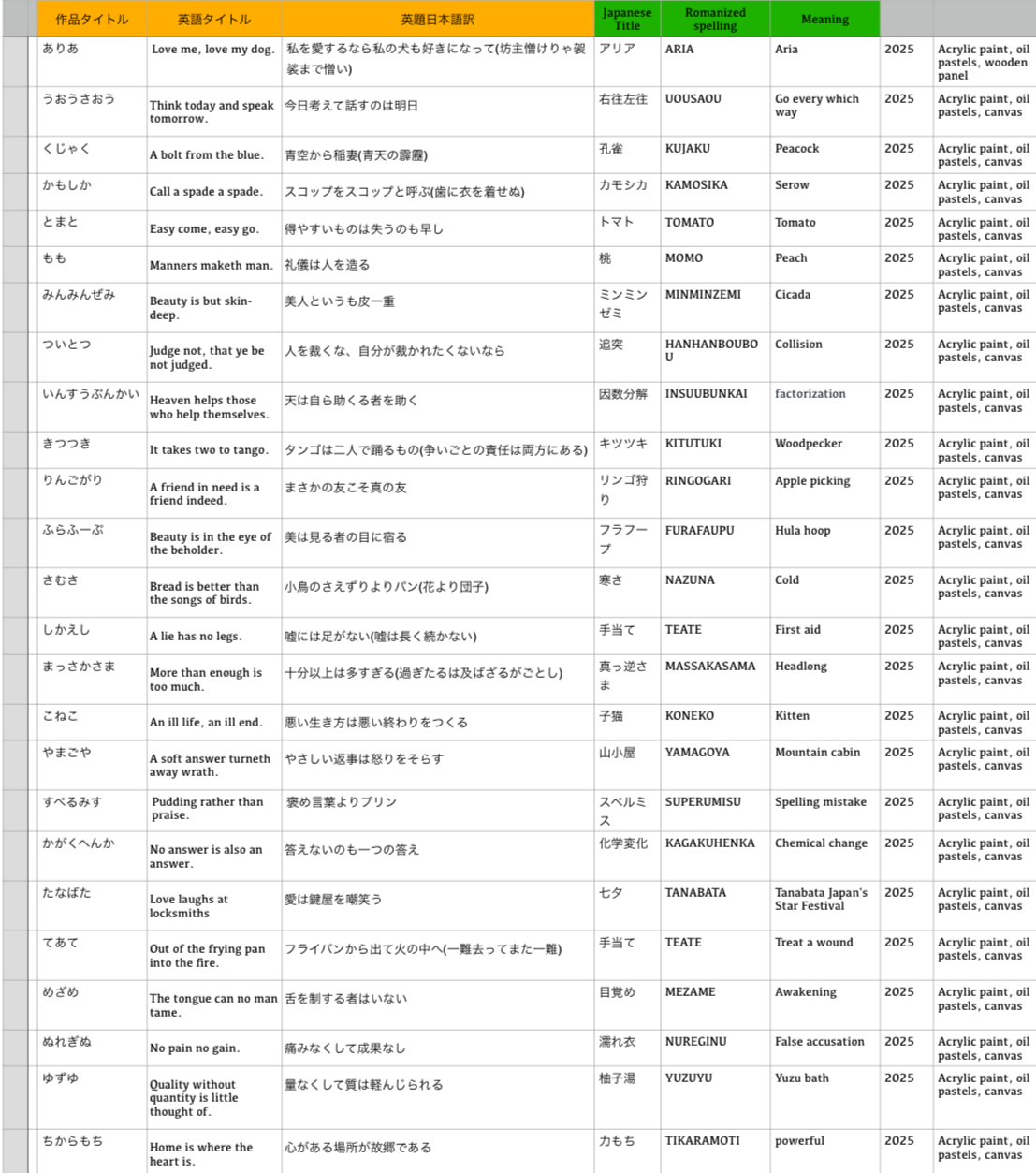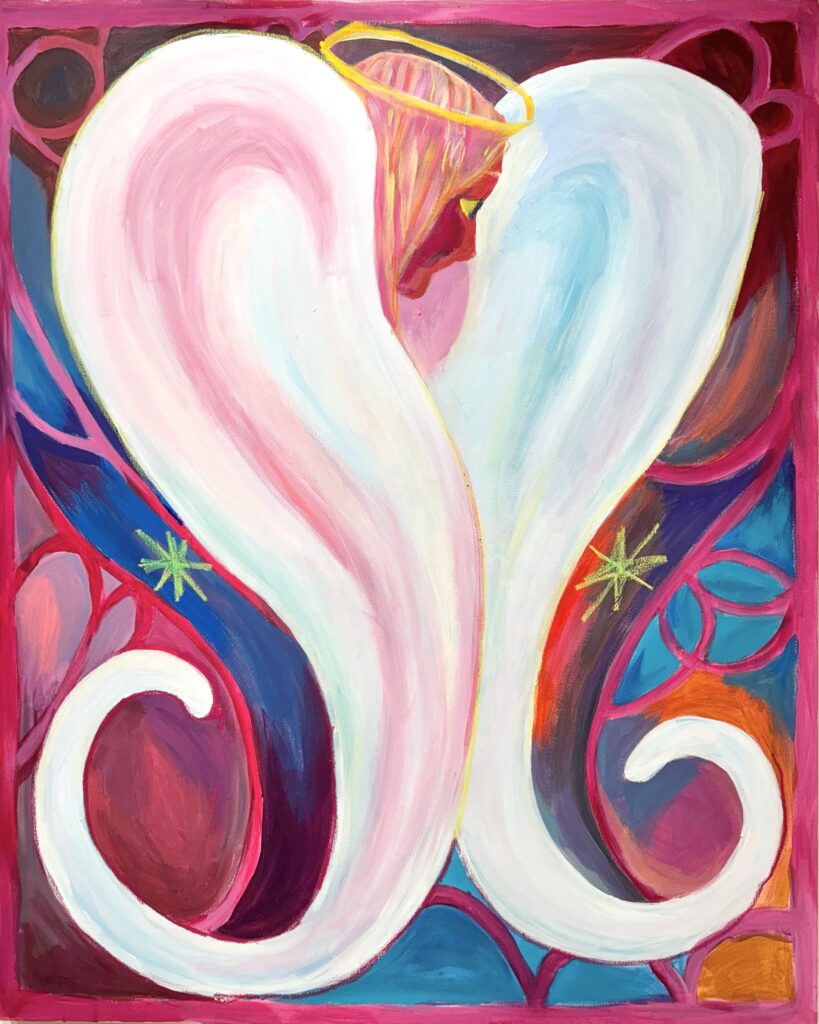
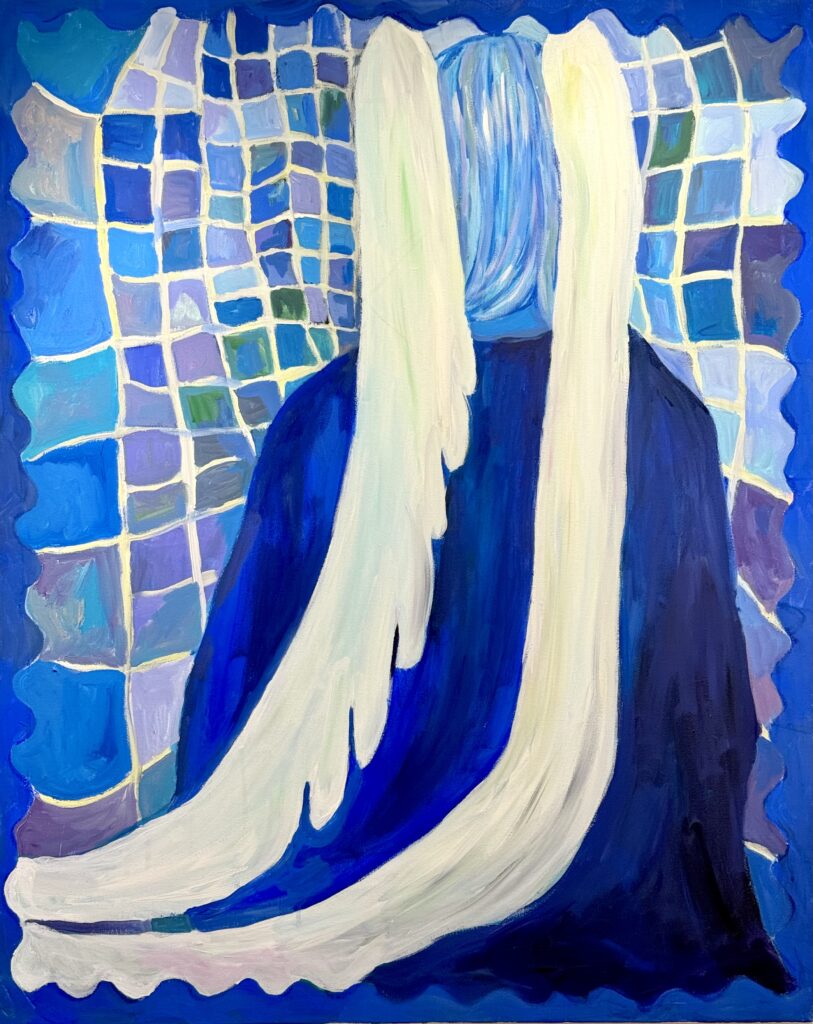
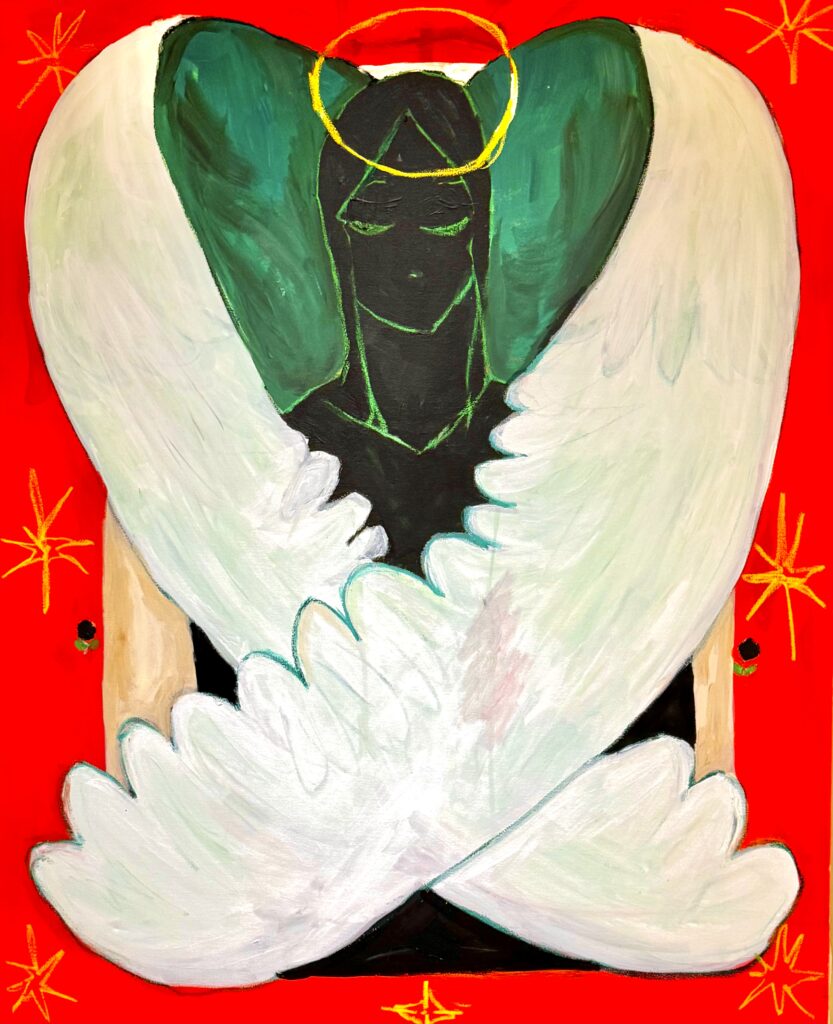
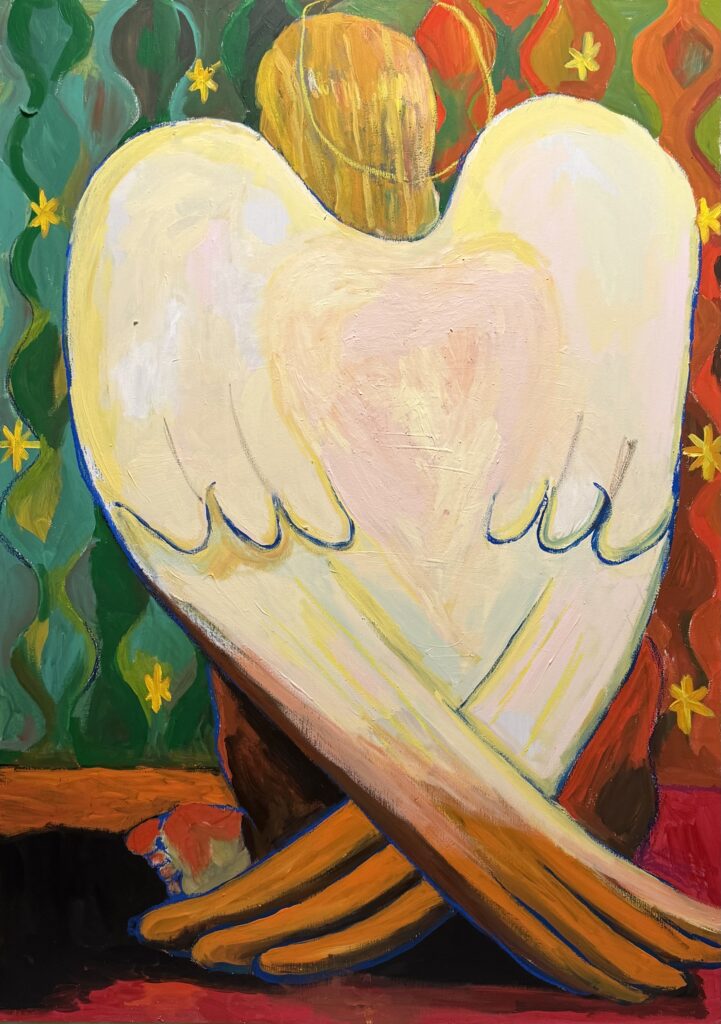
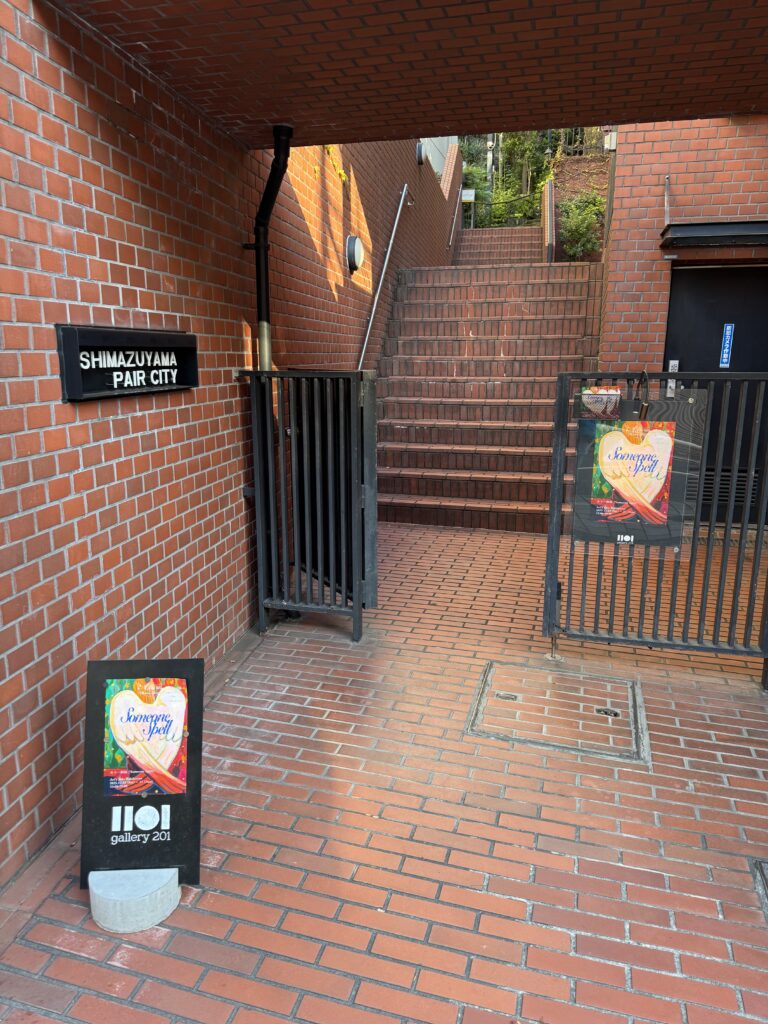
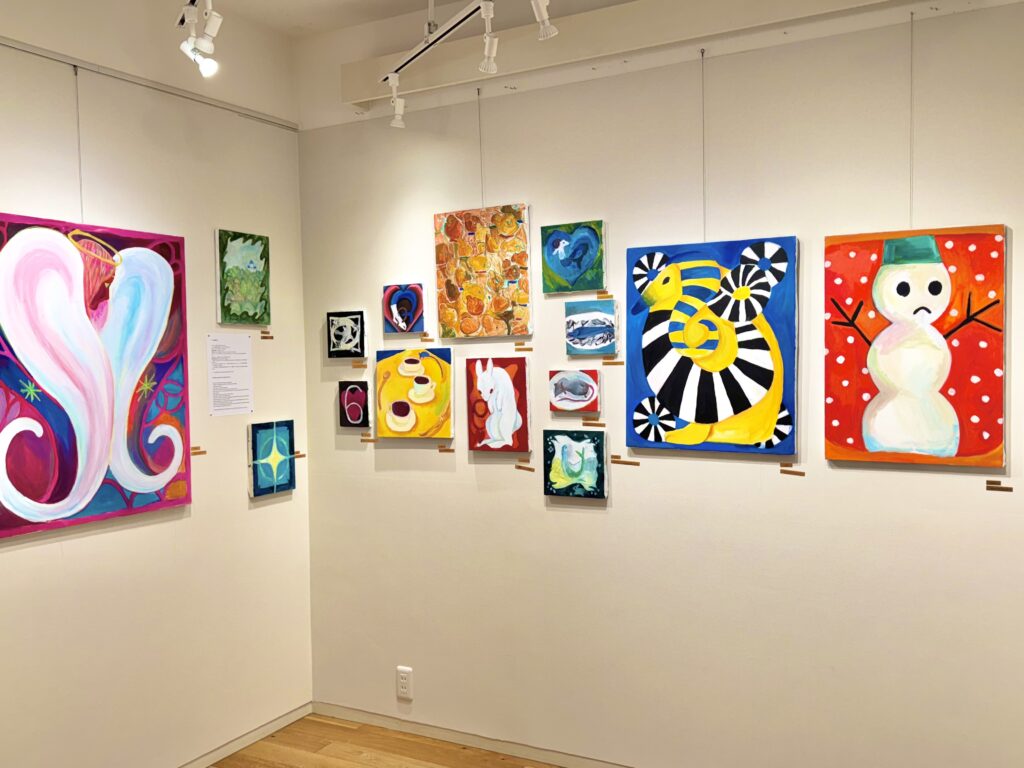
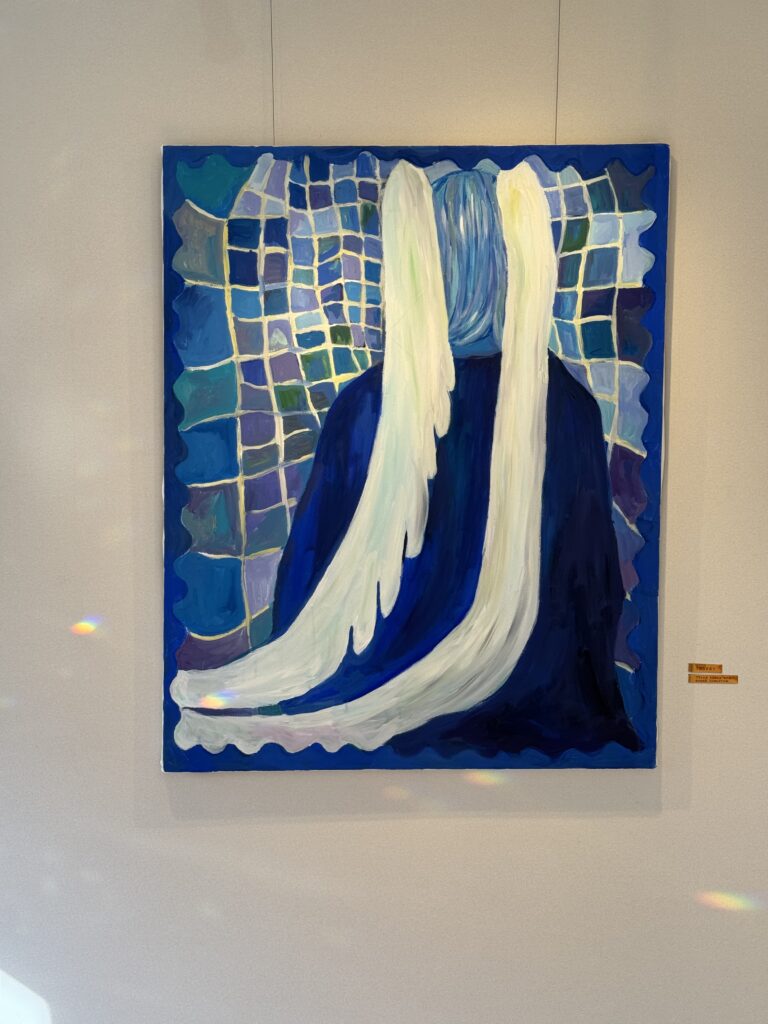
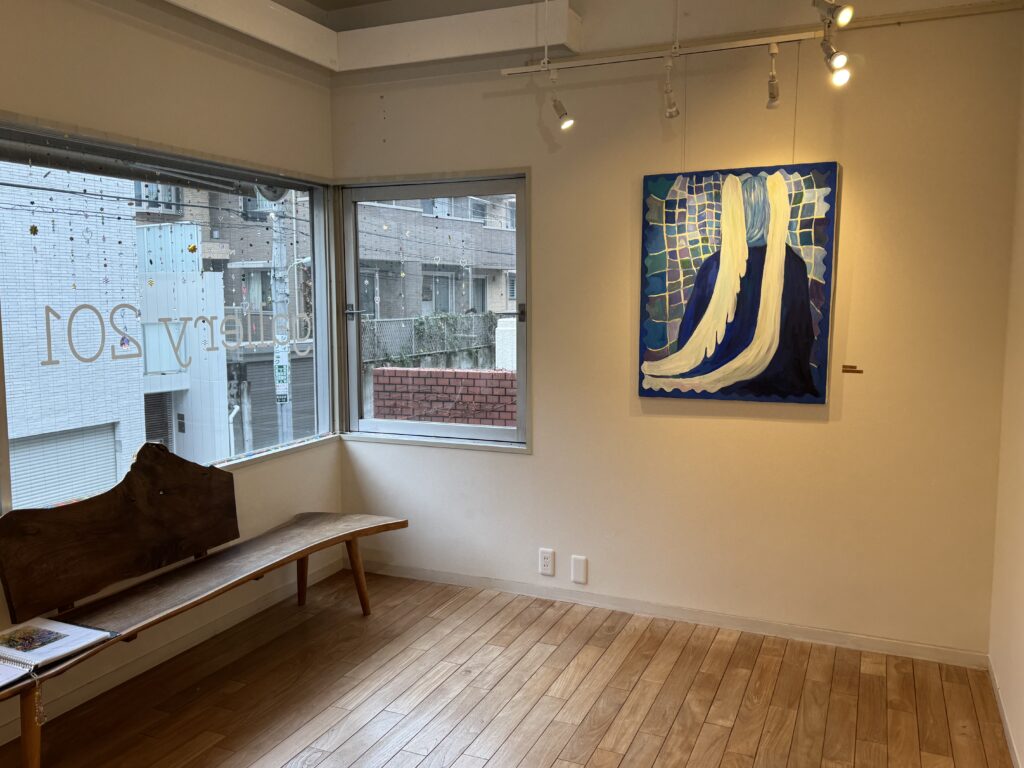
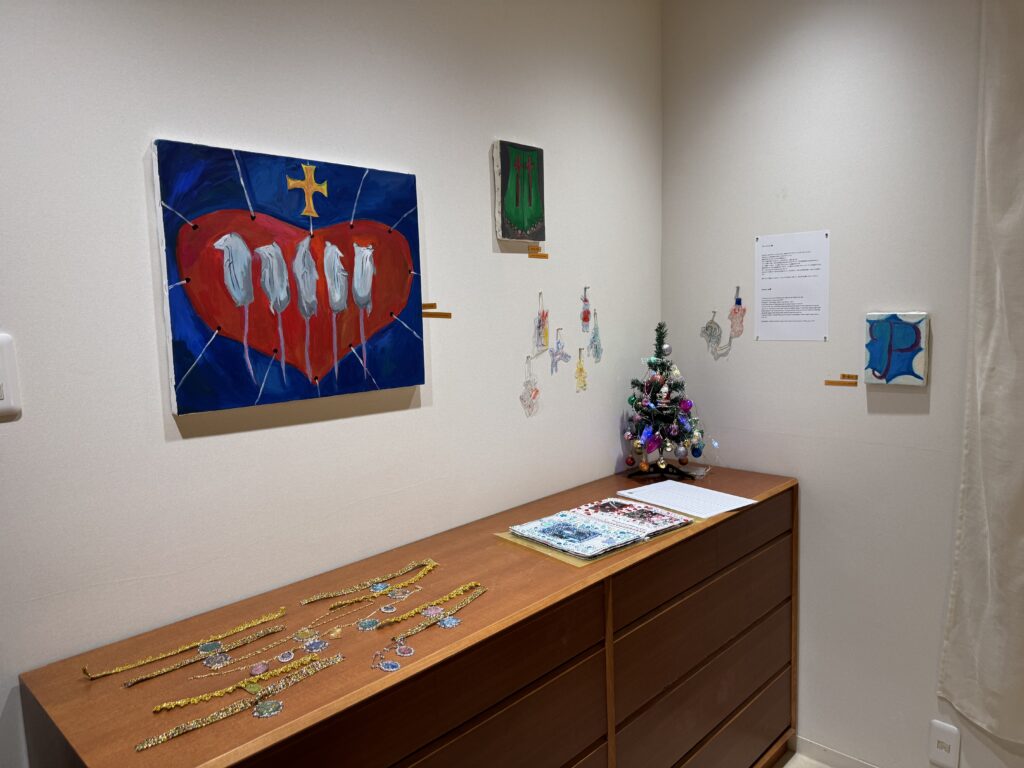
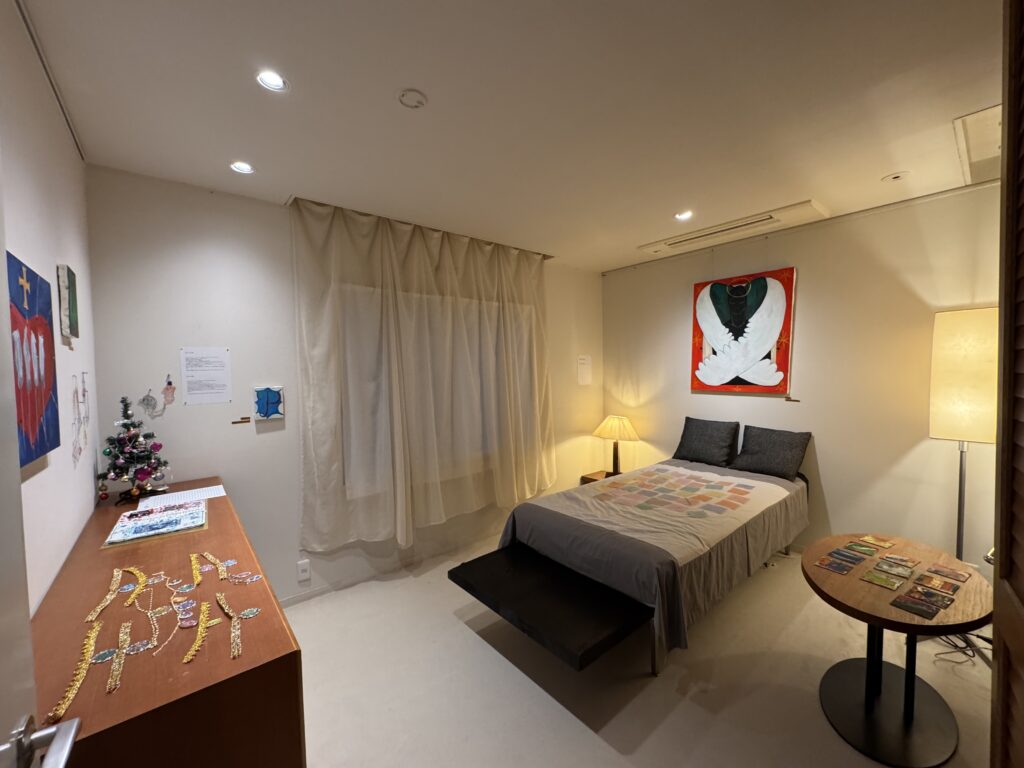
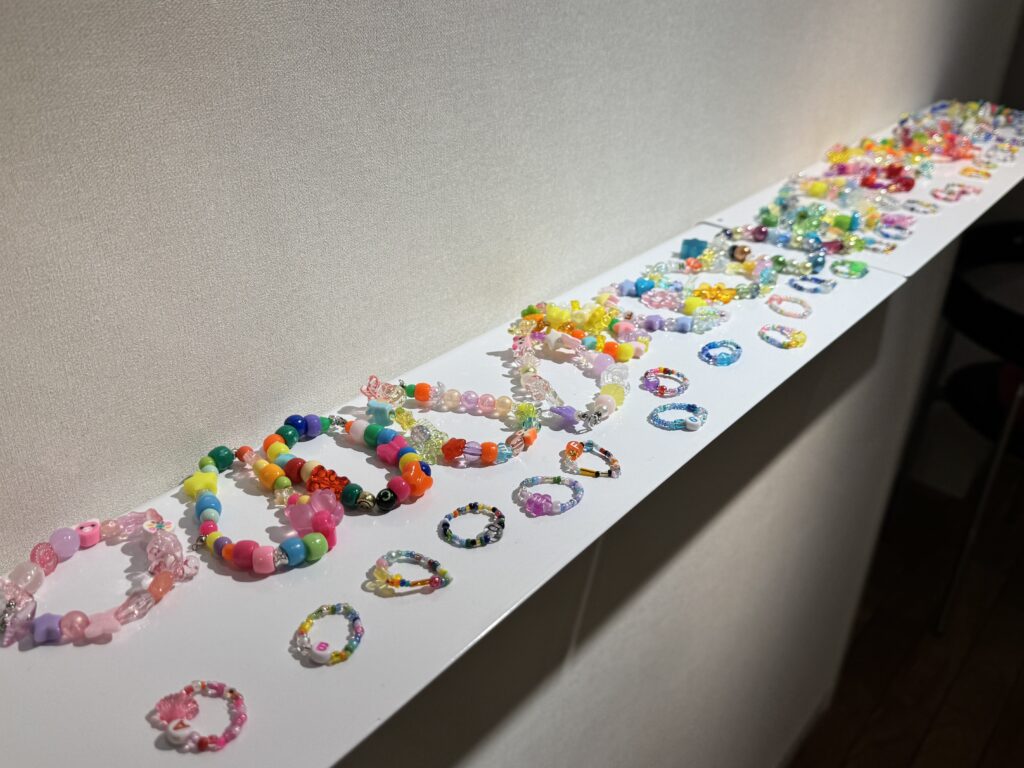
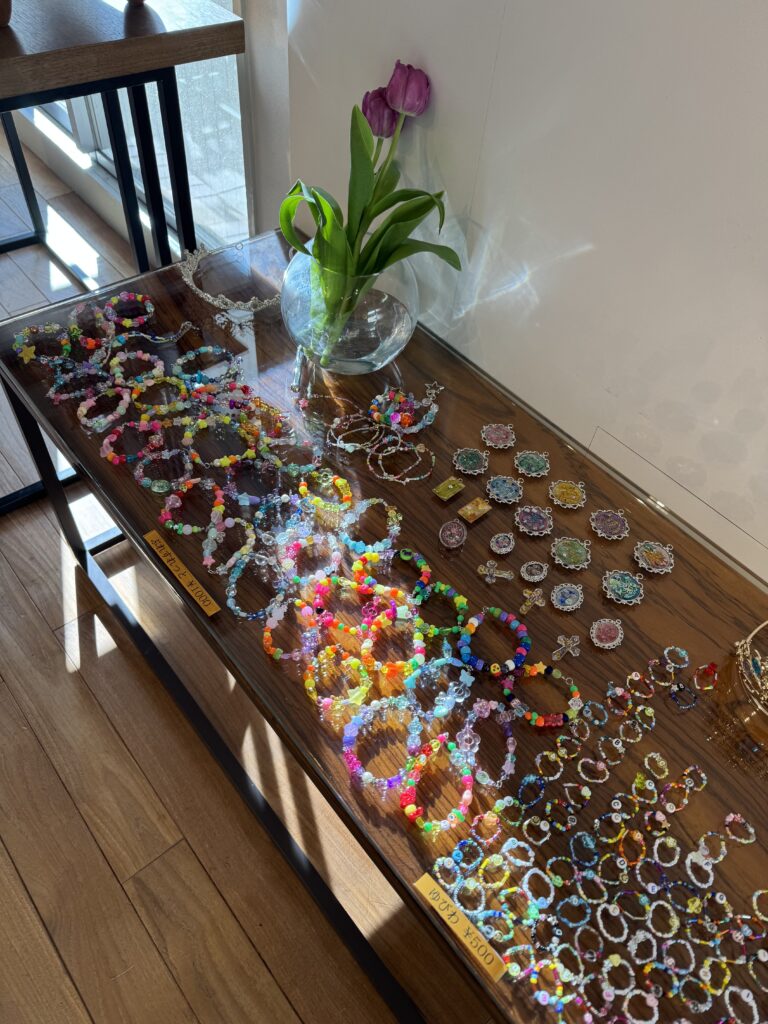
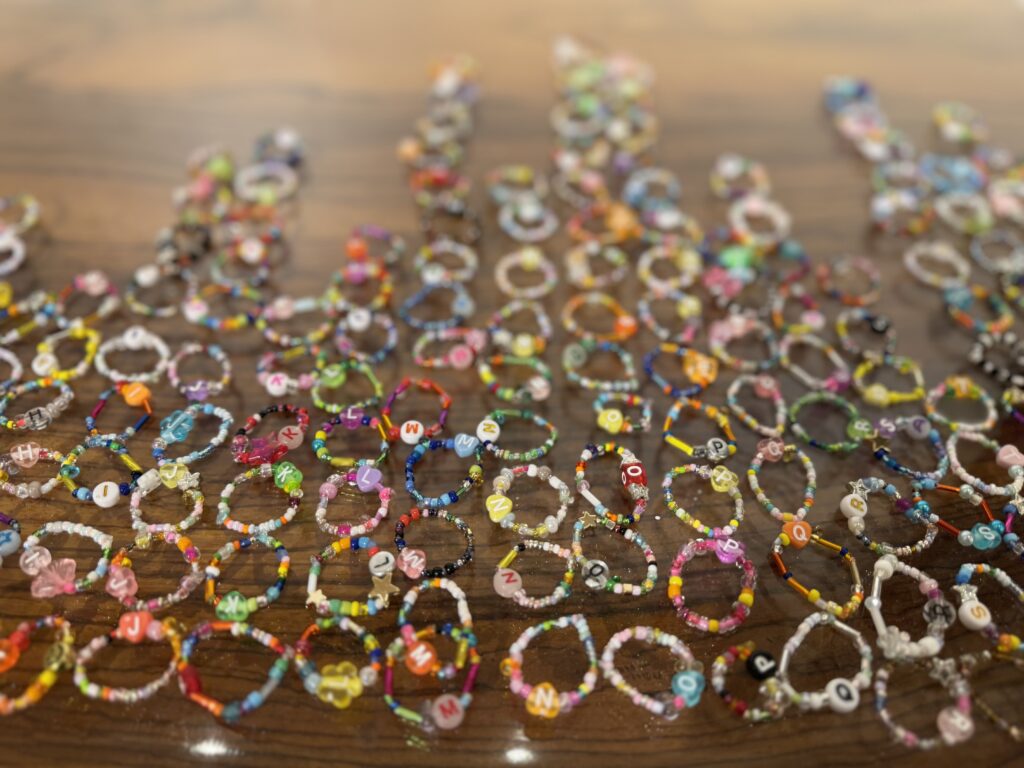
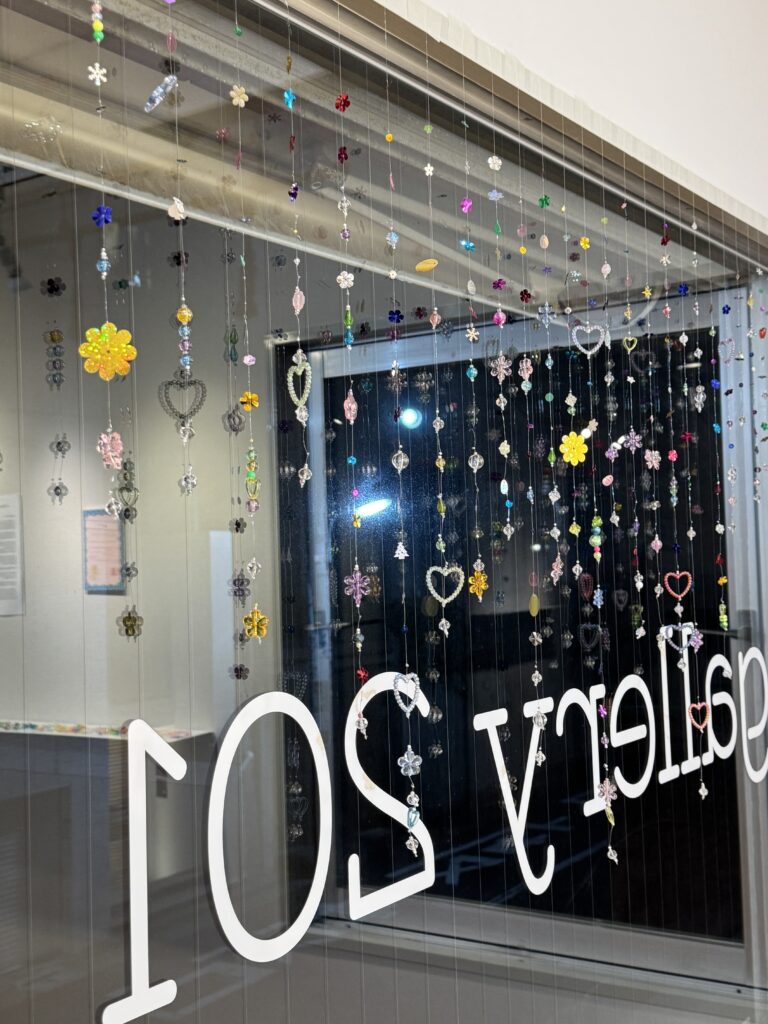
この展覧会は言葉や文字をテーマにしている。世界には無数の言語が存在する。英語の「A to Z」は、「全て」あるいは「初めから終わりまで」を意味する。日本語の文字は、アルファベットに対応させられるが、同一ではない。言語は、私たちの生活に浸透している。キーボードやコードから歴史や経典に至るまで、誰が書き、誰が創ったか―つまり使用された言語体系―は対象そのものの構造に大きく影響する。日本語の名前は、AからZまでの26文字全てを使用しない。さらにイニシャルのアクセサリーなどは、需要の高い文字のみが用いられるのが一般的である。それでも、AからZまでのイニシャルを持つ人々が日本に確かに存在する。悪意なくとも、大きなシステムや枠組みの隙間からこぼれ落ちるアイデンティティは、個人にとってかけがえのない概念である。現代では、スマートフォンであらゆる言語を翻訳できる。単純な翻訳は可能だが、原文はその土地の文化・価値観・歴史を含んでいる。さらに言葉は、個人の経験・背景・人間性を強く反映する。言語には、致命的な欠陥があることを忘れてはならない。それは、理解する者が必要だということだ。そして、言語は個人の私有物ではない。 ”誰かの”言語を使用するにあたって、差別的な背景をもつ言葉に無責任にはなれない。「自分がひどい目に遭ったから、他人を傷つけても構わない」などという、絶望的なロジックを罷り通らせてはならない。言葉は受け取る側にもまた責任があるからだ。言語は、世界を記述し得ない。この世界は、合理的であるとは限らない。異なる言語間に対応する概念が、必ずしも存在するわけではない。しかし想像力豊かな私たちは、今ここになく、経験したことのないものでさえ、その隙間を埋められるはずだ
This exhibition explores the themes of language and writing. There are countless languages in the world. The English phrase “A to Z” means “everything” or “from beginning to end.” While Japanese characters can be mapped to the alphabet, they are not identical. Language permeates our daily lives. From keyboards and codes to history and sacred texts, who wrote them and who created them—that is, the language system used—significantly influences the very structure of the objects themselves. Japanese names do not use all 26 letters from A to Z. Furthermore, it is common for accessories featuring initials to use only the letters in high demand. Nevertheless, there are certainly people in Japan whose initials fall within the A to Z range. Even without any malicious intent, identities that slip through the cracks of large systems or frameworks are irreplaceable concepts for the individual. In today’s world, smartphones can translate any language. While simple translation is possible, the original text embodies the culture, values, and history of its region. Furthermore, words strongly reflect an individual’s experiences, background, and humanity. We must not forget that language has a fatal flaw: it requires someone to understand it. And language is not the private property of any individual. When using “someone else’s” language, we cannot be irresponsible toward words that carry discriminatory connotations. We must not allow desperate logic—such as “Since I’ve suffered terribly, it’s okay to hurt others”—to prevail. This is because the recipient of words also bears responsibility. Language cannot fully describe the world. This world is not necessarily rational. Corresponding concepts do not always exist between different languages. However, with our rich imaginations, we should be able to fill in those gaps—even for things that are not here and now, or that we have never experienced.
展示会場の文章
◯言葉が世界を区別する🎂
蝶はきれいでかわいく、蛾は怖かったり気持ち悪いイメージがあるかもしれません。
しかし本当は、蝶と蛾に明確な区別はありません。
日本語では、蝶と蛾という区別がありますが
フランス語で蝶と蛾はどちらも「パピヨン」で、
同じようなものだと捉えています。
私たちは世界を言葉で捉えていると思いがちですが、
本当は言葉が世界を区別しているのです。
◯ケーキを五等分🍰
ホールケーキを5人で食べるとします。
ケーキを正確に五等分してくださいと言われると、
むずかしそうだと思うかもしれません。
角度を計算をしてみるという人や、
五等分するうらわざを知っているという人もいるかもしれません。
なんとなくでいいのではないか?そんなに大事なことか?と気にしない人もいるかも知れません。
そもそもケーキが嫌いな人もいるかも知れません。
問題に疑問を持つ人もいるかもしれません。
「正確に」とはどのくらい?みんなが平等だと感じればいいのか?角度も合っていなければならないのか?
けれど上に乗っている苺やチョコレートに偏りがあるかもしれないし、ケーキの中の味が場所によって違うかもしれません。
ケーキを五等分した正確な角度が計算で出せても、実際のケーキは包丁で上手に切れるとは限りません。
ケーキを五等分できたと決めるのはあなた自身なのです。
◯バケットリスト🪣
Bucket List(バケットリスト)とは、死ぬまでにやりたいことリストのことです。
それはいい人生を送るための一つのアイデアです。
死ぬまでにやりたいことを100個なんて、
わたしはまだ思いつかないし、決めきれないと思いました。
リストに書くには、まずこの世界に何があるのかすべてと、その名前を知らねばなりません。
とても嬉しいときに、もう死んでもいい!という表現があります。
死ぬまでにというのは実感がないけれど、これをやったら死んでもいいということをあげていけば、ベストなリストが作れると思いました。
まだひとつも書いていませんが完成したら、それが私というものは何かを表しうるような気がします。
空のリストを置いているので、よろしければ持って帰って、みなさんも書いてみてください!
◯翻訳🌱
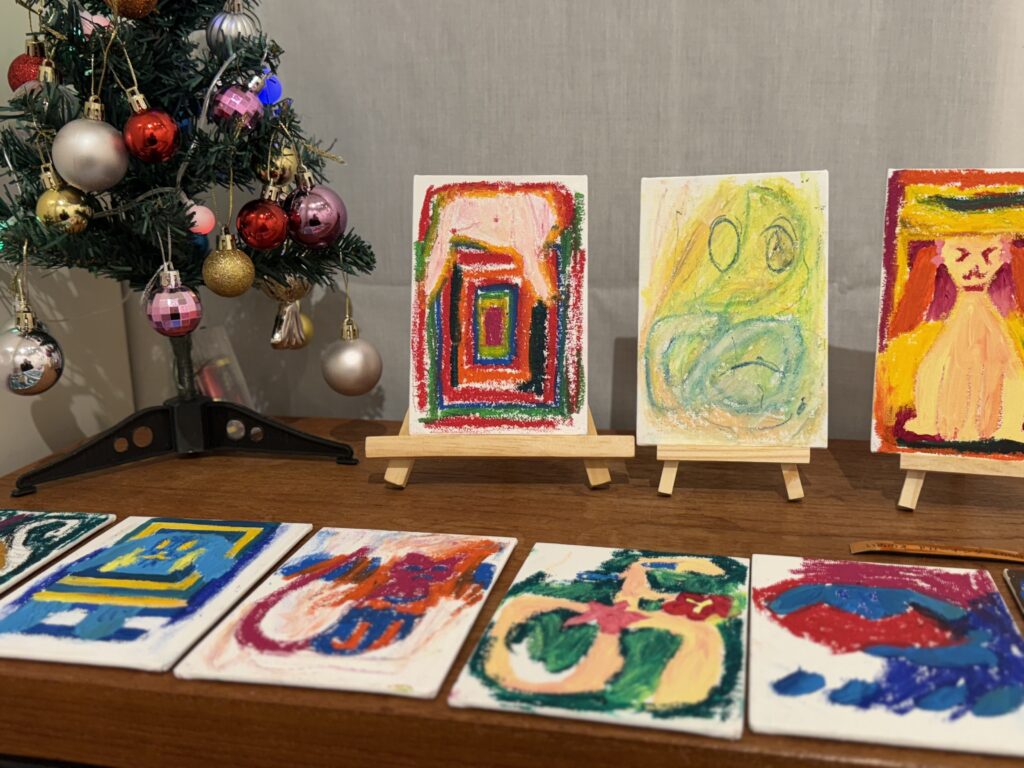
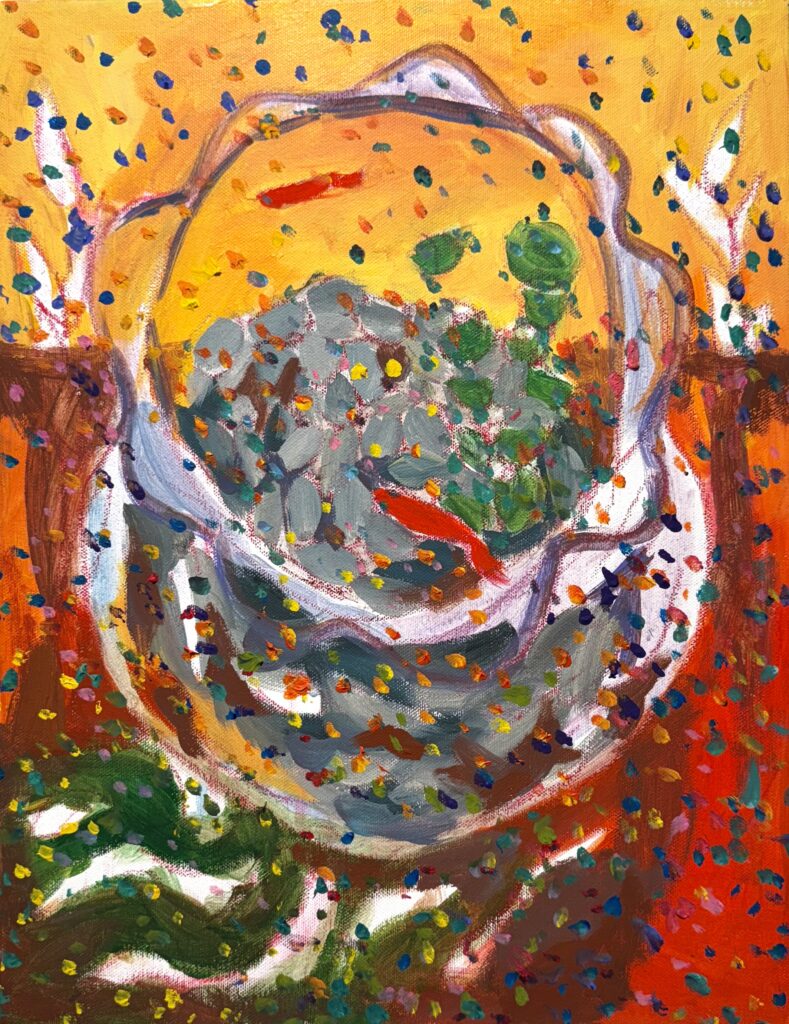
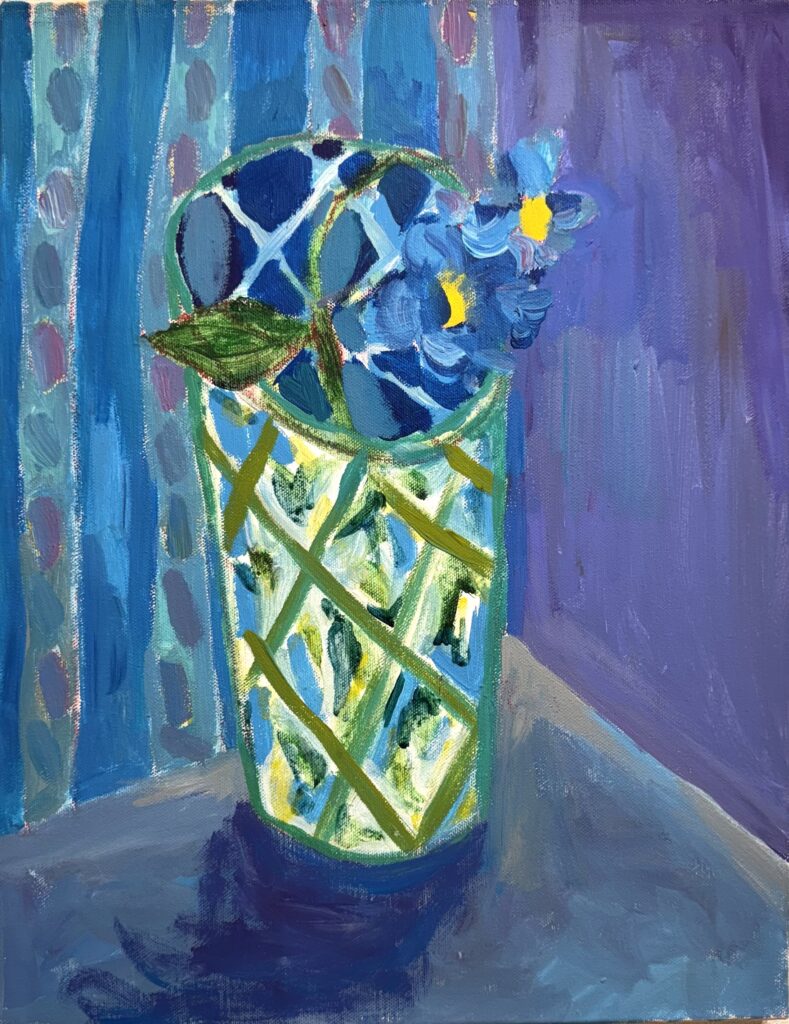
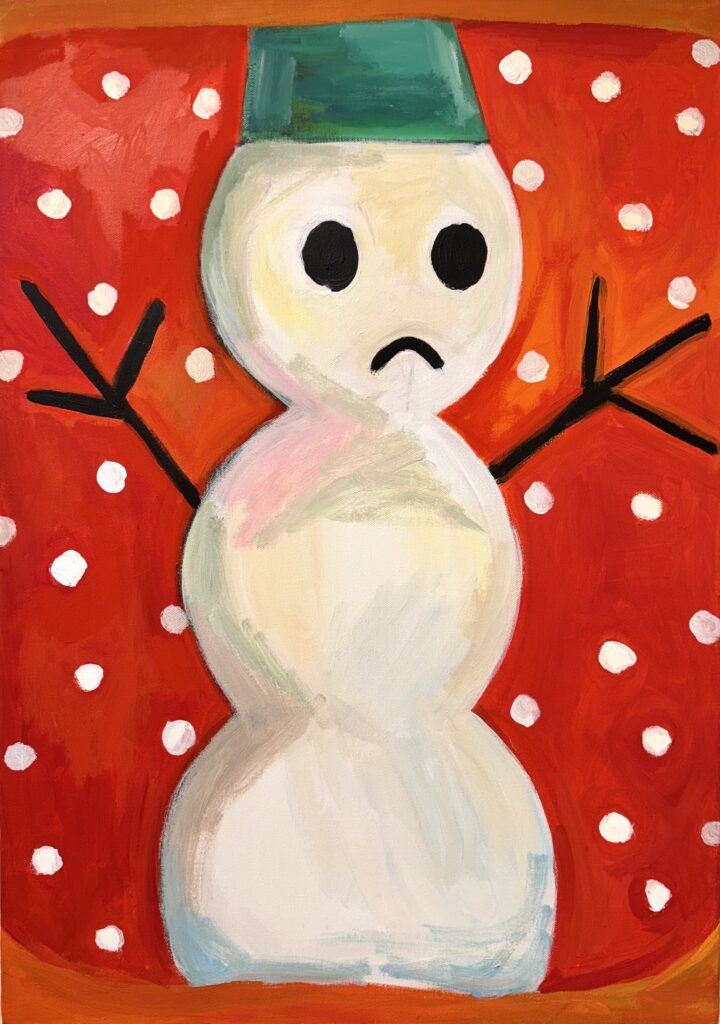
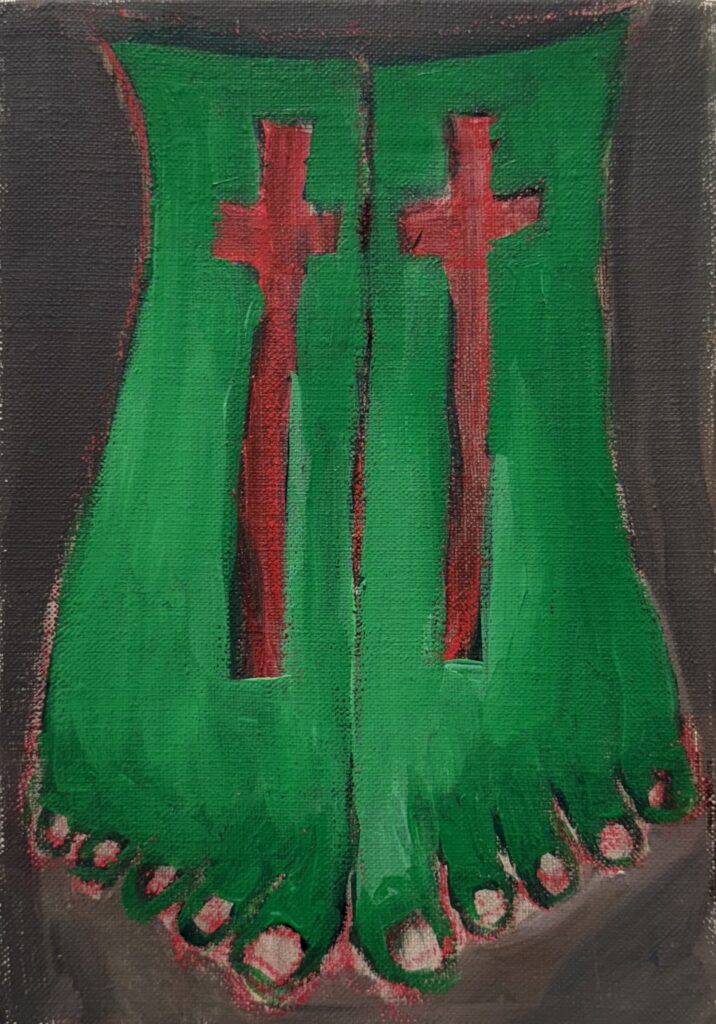
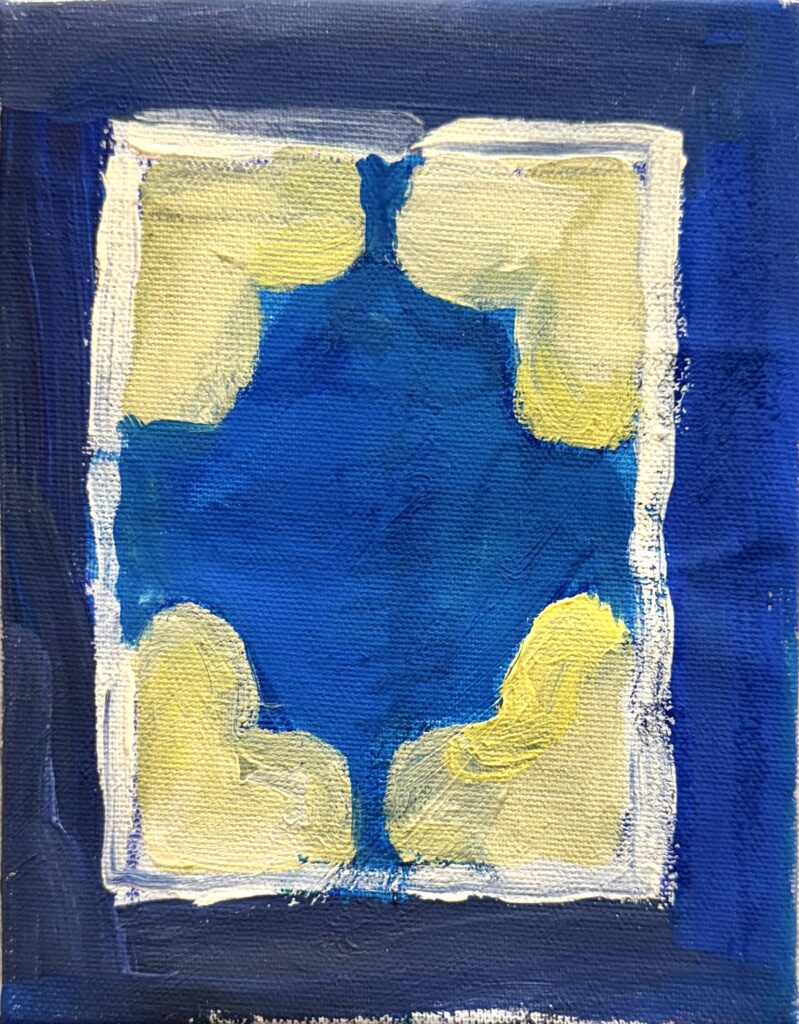
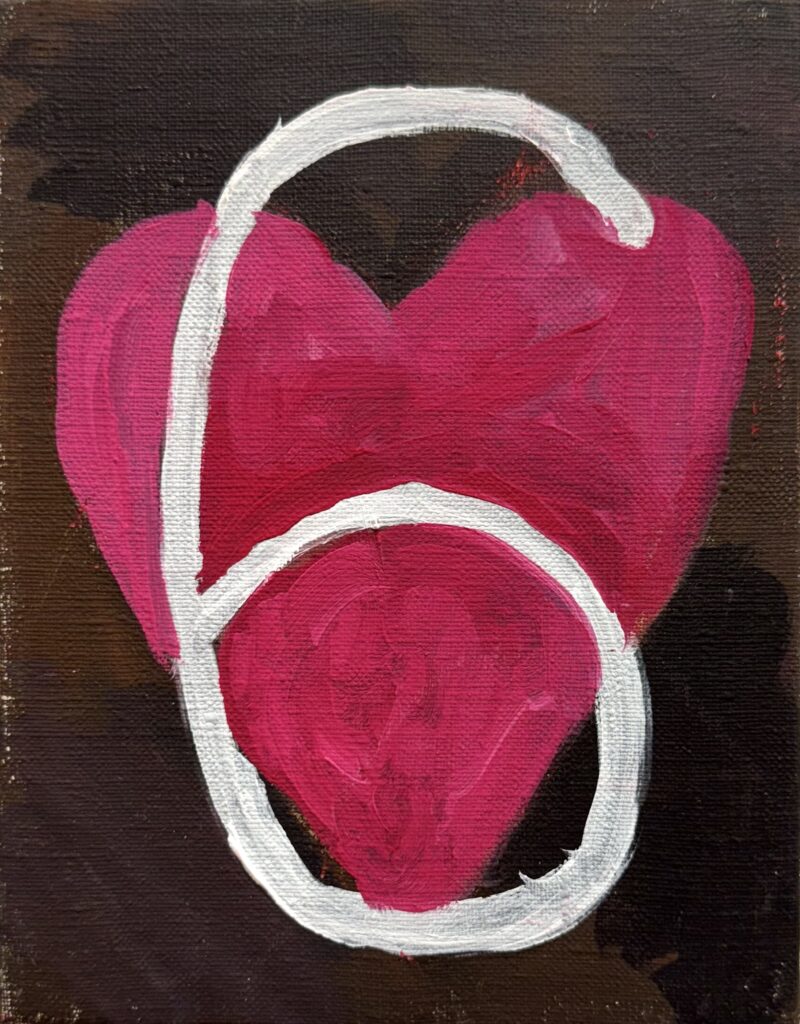
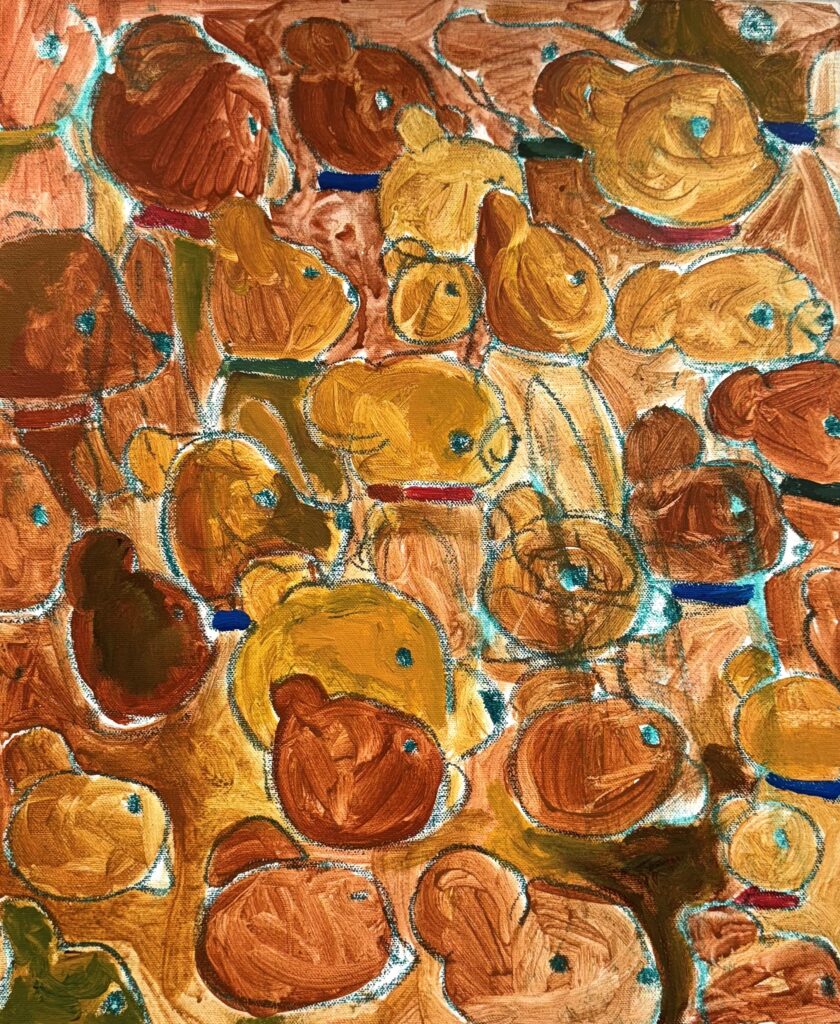
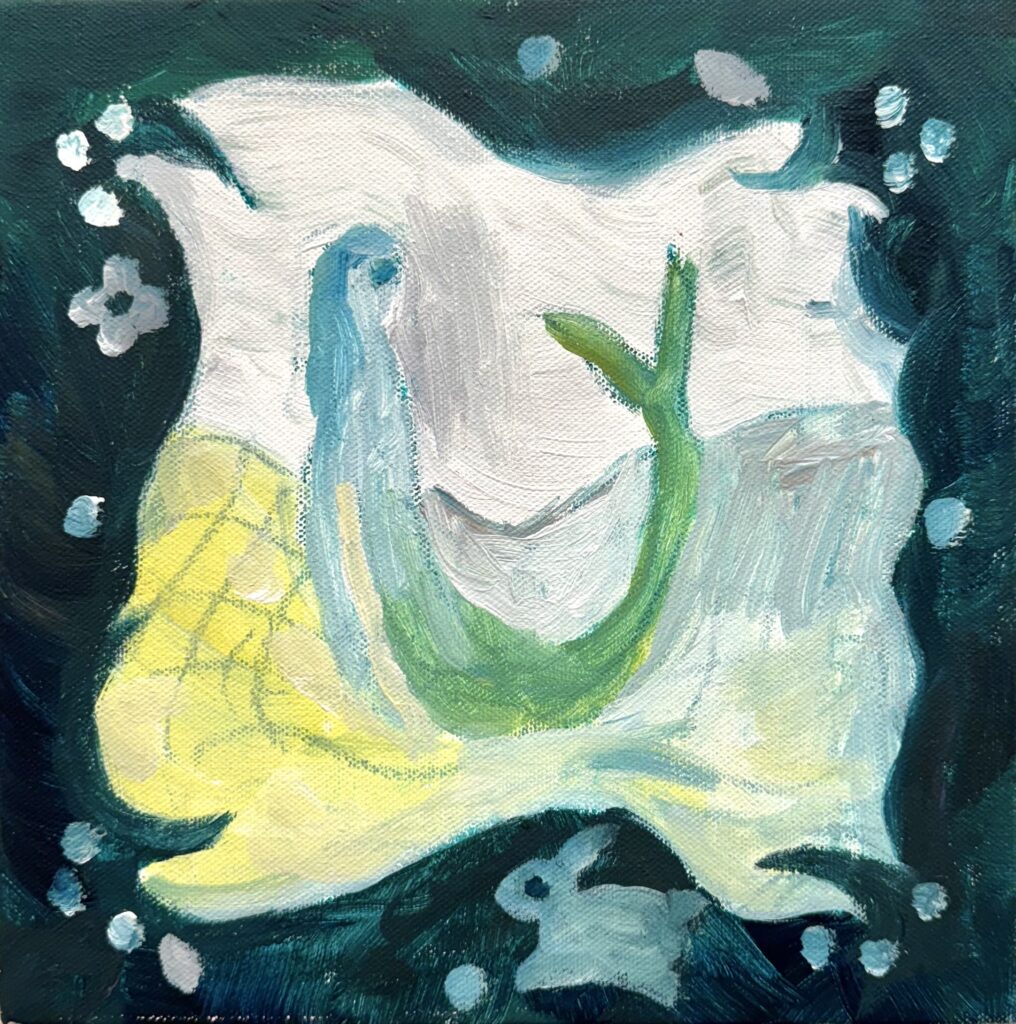
この展示の絵のタイトルは、回文や繰り返しの音がある言葉にしています。
これを英語に翻訳しようとすると、意味を直訳しても、
日本語の音遊びの部分は抜け落ちてしまいます。
なので英語のタイトルは、英語のことわざで、
同じアルファベットが繰り返し登場するものを使用しています。
両者は言葉の意味も発音もまったく違いますが、
わたしが一番大切にした音遊びの部分が再現されています。
この展示のタイトルは無理やり日本語にすると、
「誰かのスペル」や、「魔法にかけられた誰か」などと訳せます。
翻訳はある言語とある言語がぴったりと対応するものではありません。
正解はひとつでありません。
どのタイトルだと気にいるのか、納得するのかなど、それは
あなたが感じたことがいちばん大切なのです。
◯さいごに🌸
自分の心は自分で伝えなければなりません。
あなたの心を伝えられるのはあなただけだからです。
それは日本語でも英語でも文字でも歌でも手話でもいいのです。
ーーーーー
Words distinguish the world🎂
Butterflies may seem beautiful and cute, while moths might evoke scary or creepy images.
But in truth, there’s no clear distinction between butterflies and moths.
In Japanese, we distinguish between chō (butterflies) and ga (moths),but in French, both are called “papillon,”and are perceived as similar things.
We tend to think we perceive the world through words,but in reality, words distinguish the world.
Dividing a Cake into Five Equal Pieces🍰
Let’s say five people are sharing a whole cake.
If asked to divide the cake into five perfectly equal pieces,it might seem difficult.
Some might try calculating angles,while others might know secret tricks for dividing it evenly.Some might think, “Isn’t just roughly dividing it fine? Is it really that important?” and not worry about it.Some might not even like cake in the first place.Some might question the problem itself.
What does “exactly” even mean? Is it enough if everyone feels they got an equal share? Do the angles have to match perfectly?
But the strawberries or chocolate on top might be unevenly distributed, and the flavor inside the cake might vary from spot to spot.
Even if you could calculate the exact angles for five equal pieces, you might not be able to cut the actual cake neatly with a knife.
Ultimately, deciding that you’ve divided the cake into five equal pieces is up to you.
Bucket List🪣
A Bucket List is a list of things you want to do before you die.
It’s one idea for living a good life.
I thought, “100 things I want to do before I die? I can’t even think of that many yet, let alone decide on them.”
To write a list, you must first know everything that exists in this world and its names.
There’s an expression used when you’re incredibly happy: “I could die happy right now!”
While “before I die” feels abstract, I thought listing things that would make me feel like I could die happy after doing them would create the best list.
I haven’t written a single thing yet, but once it’s complete, I feel it might reveal what I truly am.
I’ve placed a blank list here. If you’d like, take it home and try writing your own!
Translation🌱
The titles for the paintings in this exhibition are words featuring palindromes or repetitive sounds.
Attempting to translate these into English, even with a literal meaning, loses the playful aspect of the Japanese sounds.
Therefore, the English titles use English proverbs where the same alphabet appears repeatedly.
While the meanings and pronunciations differ completely, the sound play I valued most is recreated.
If forced into Japanese, this exhibition’s title could be translated as “Someone’s Spell” or “Someone Under a Spell.”
Translation isn’t a perfect one-to-one correspondence between languages.
There isn’t just one correct answer.
Which title you like or find satisfying―what you feel is what matters most.
Finally 🌸
You must convey your own heart yourself.
Because only you can convey your heart.
It doesn’t matter if it’s in Japanese or English, in writing or song, or even sign language.
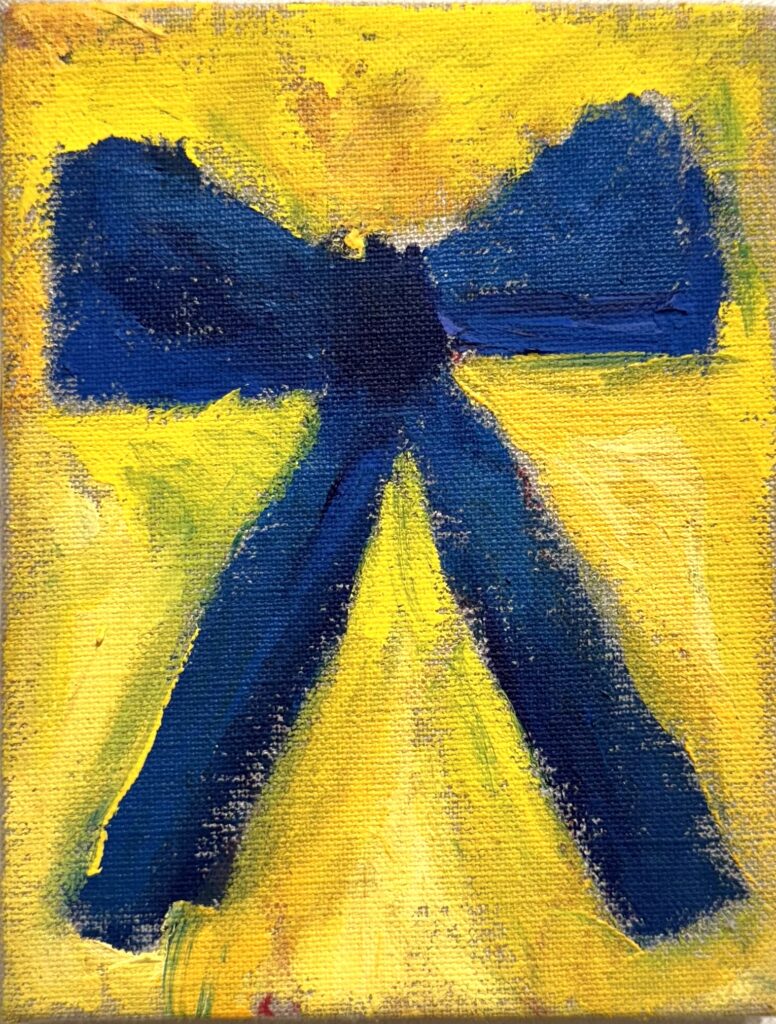
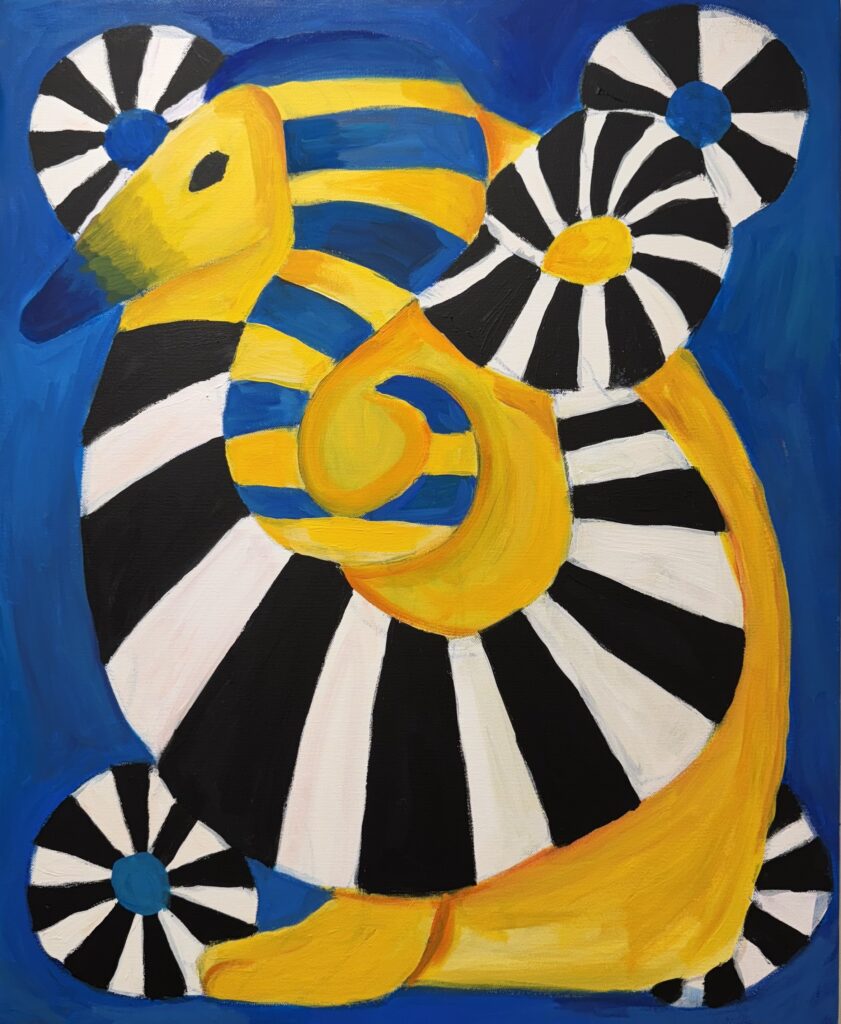
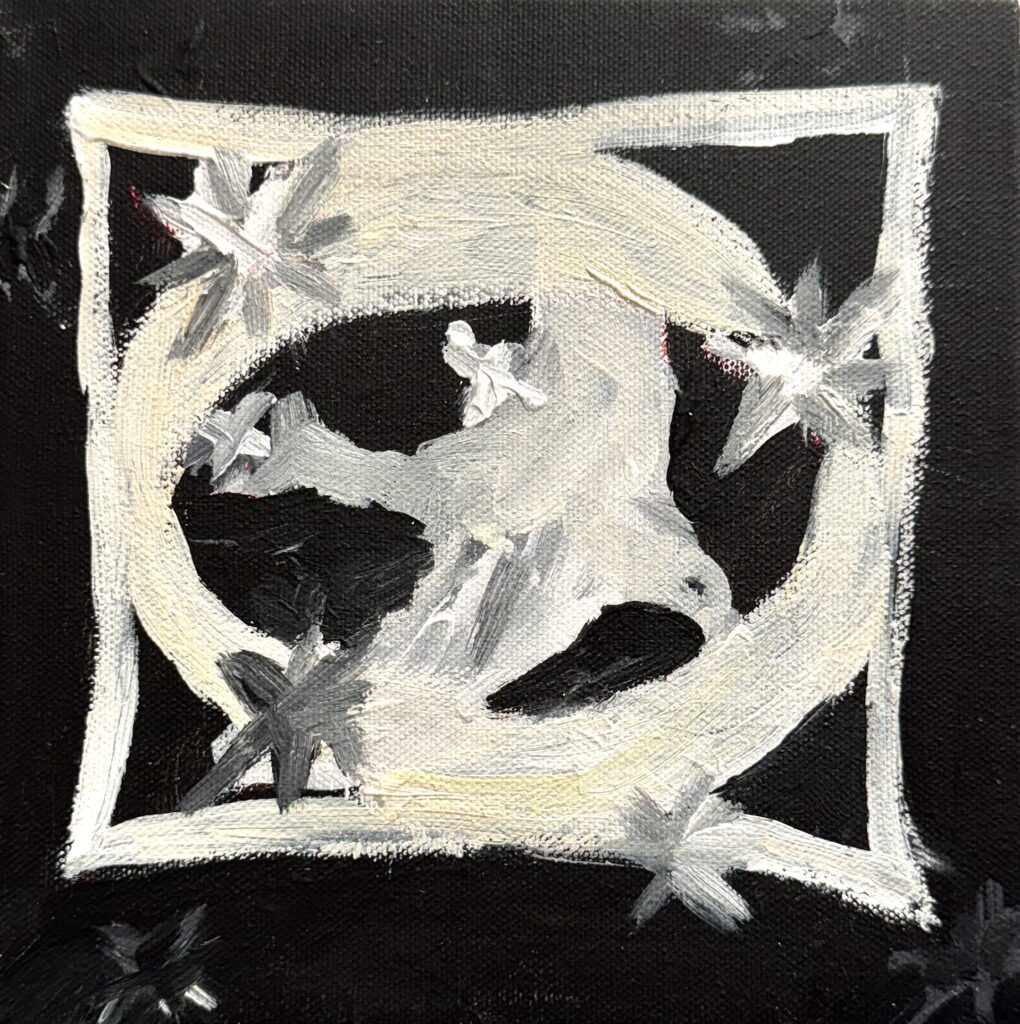
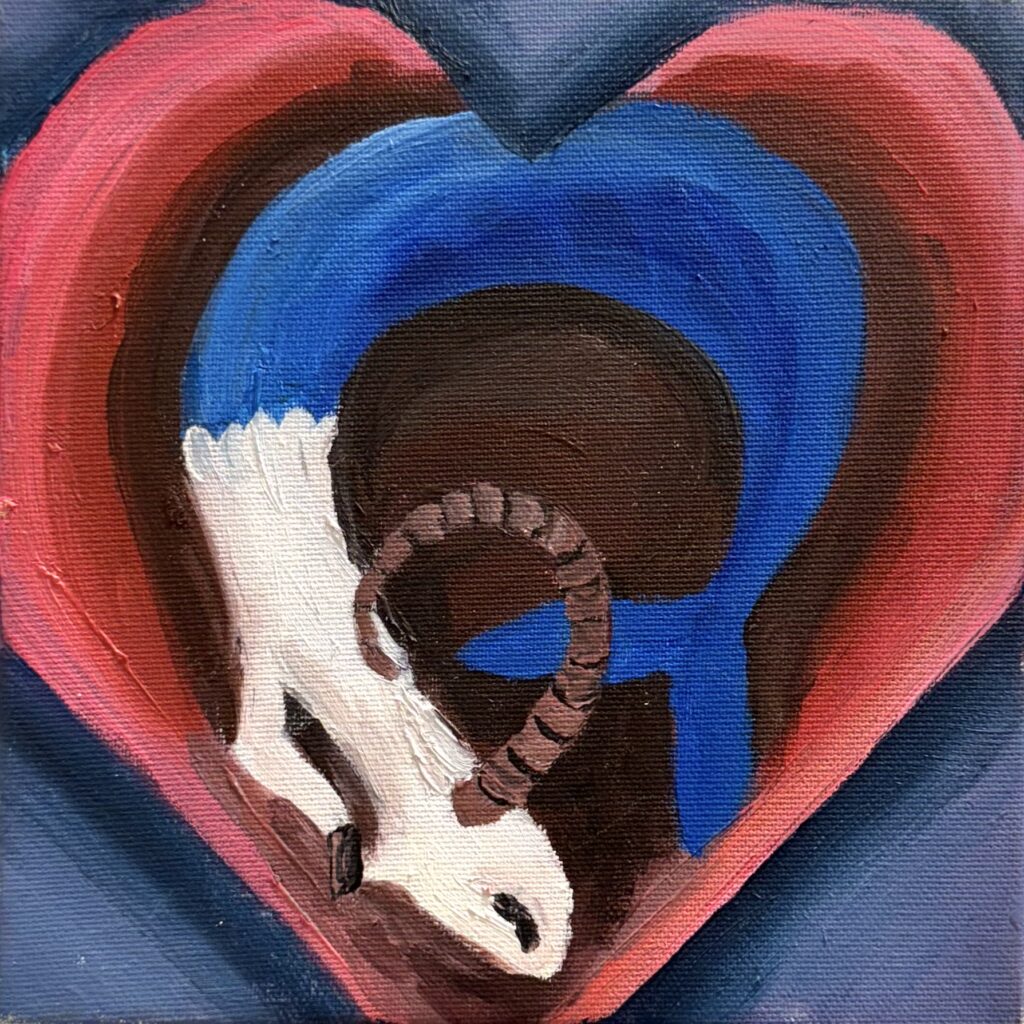
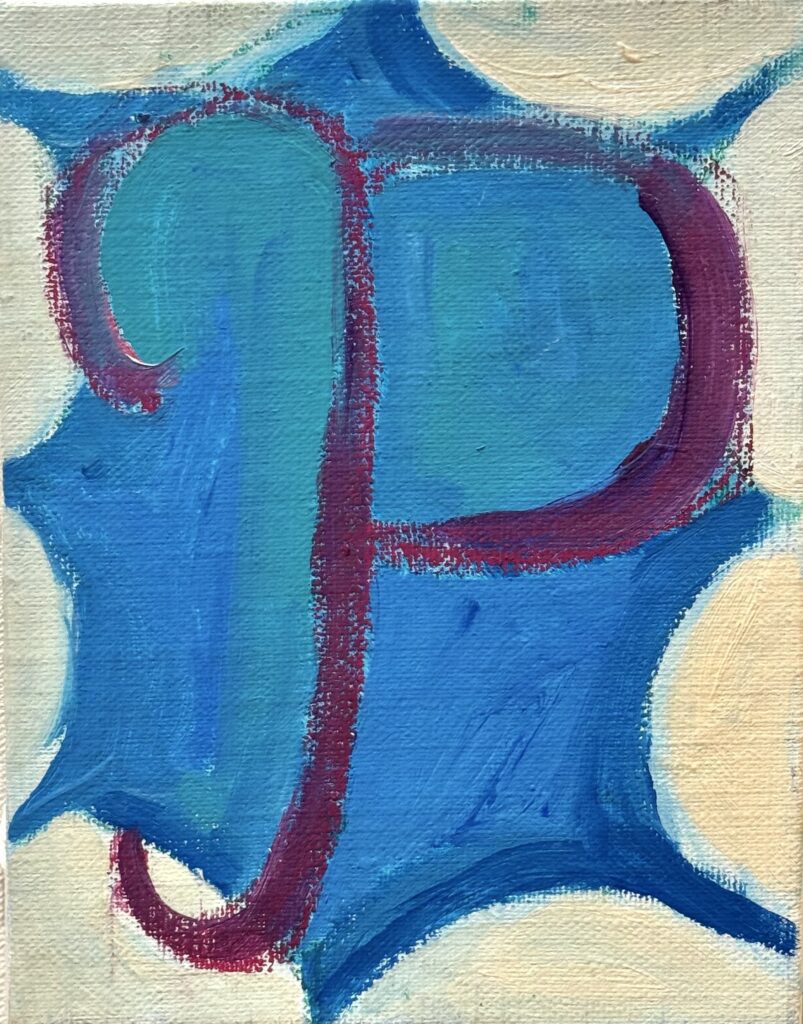
解説
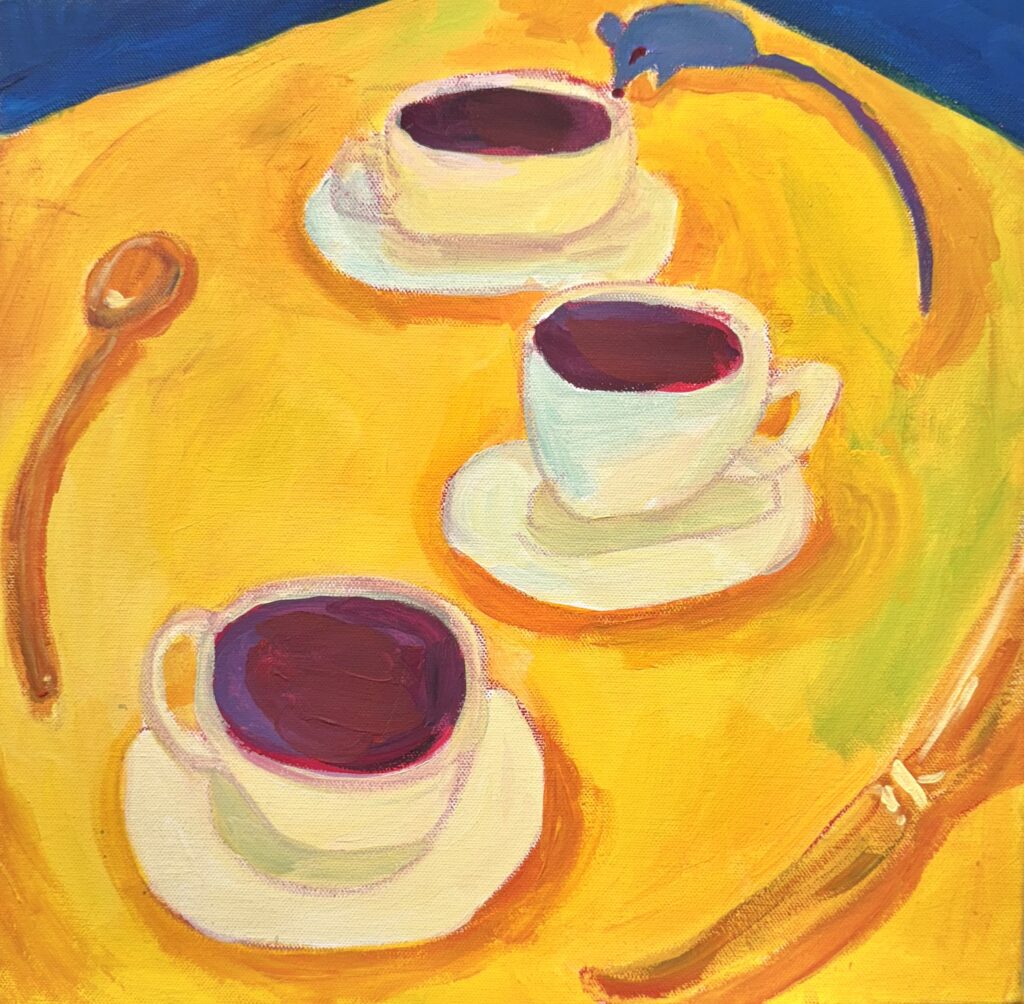
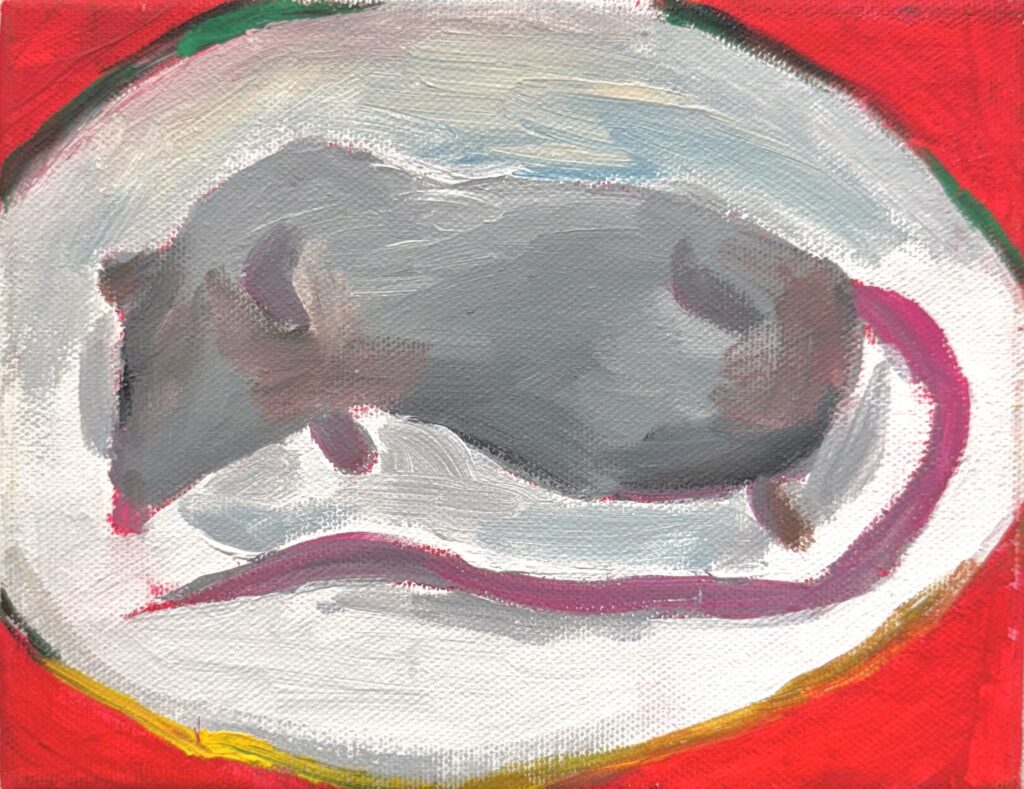
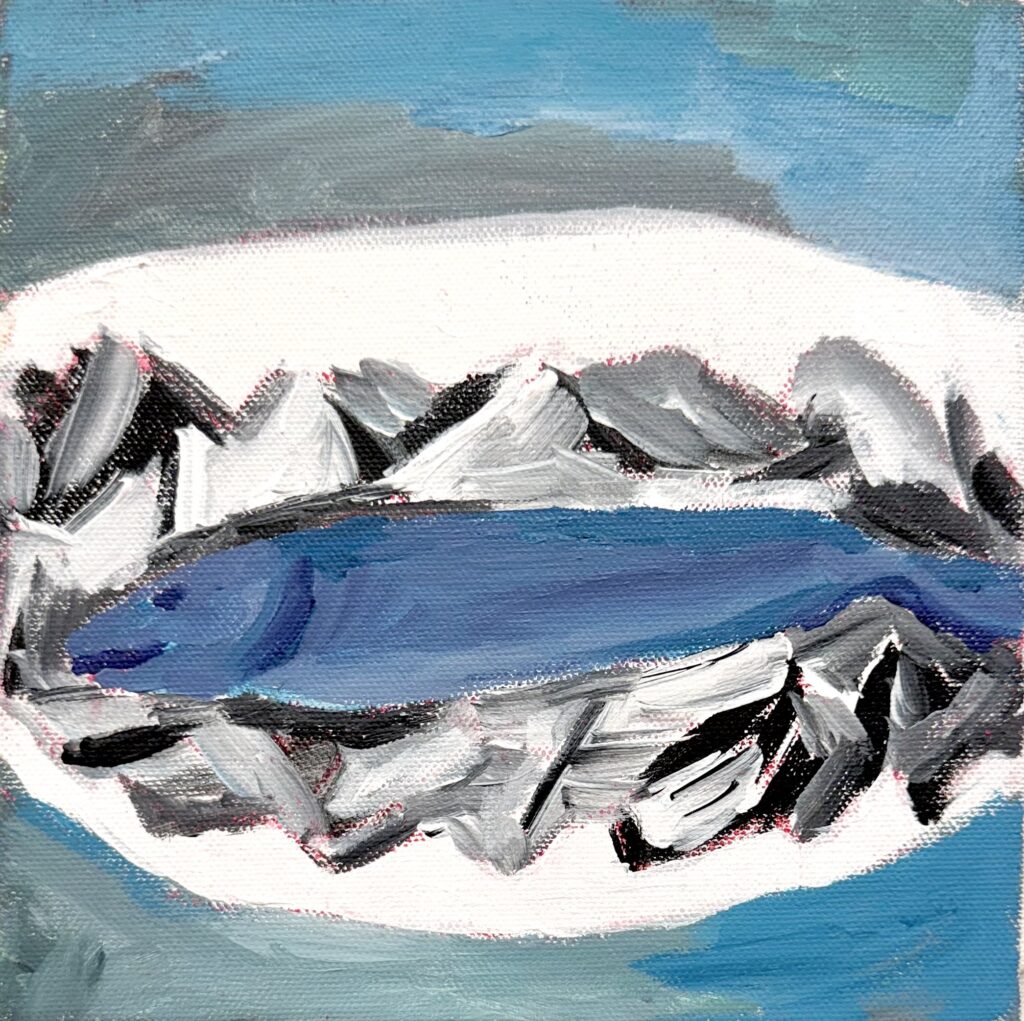
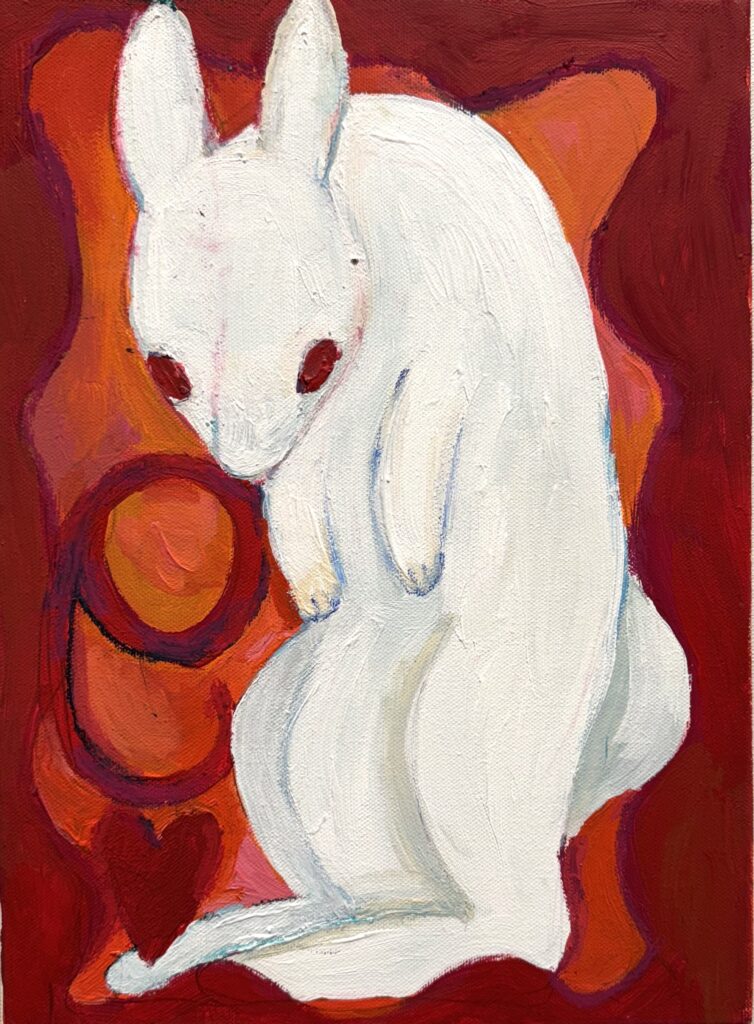
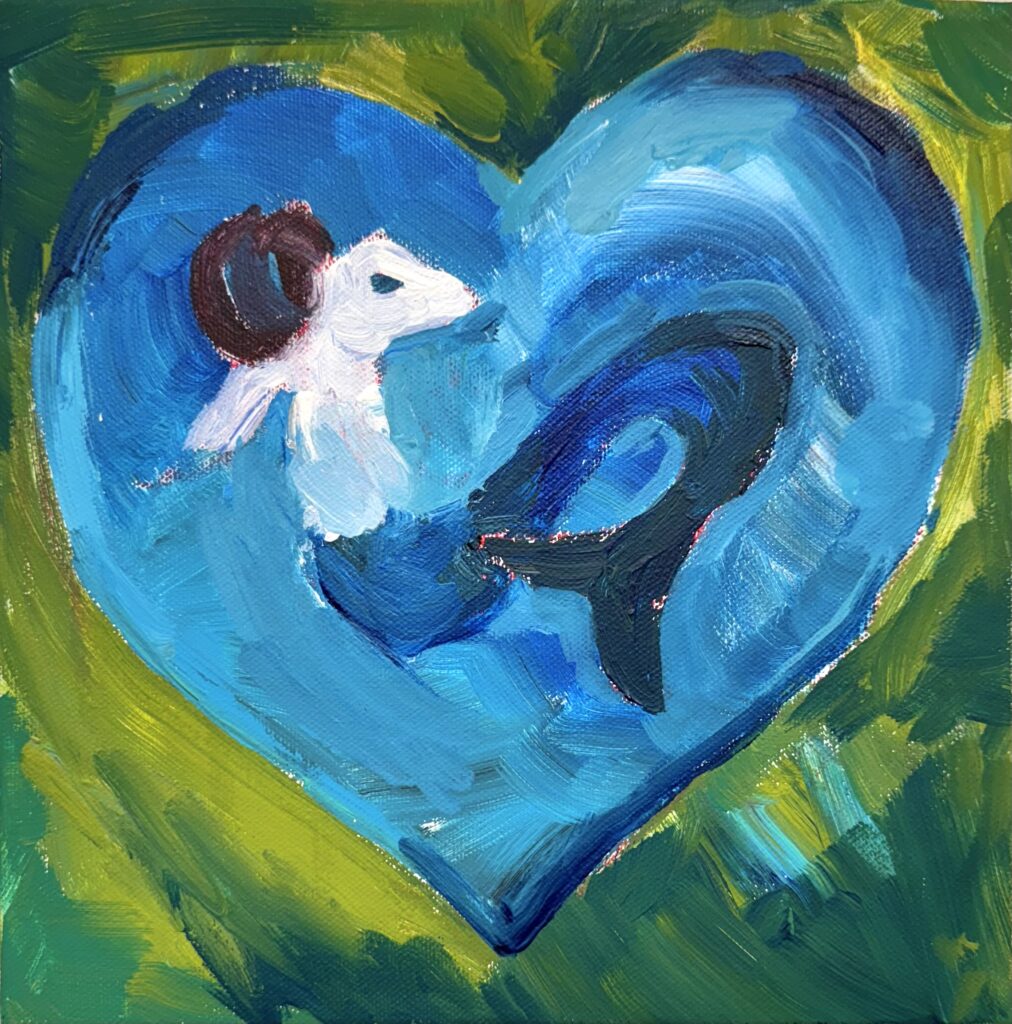
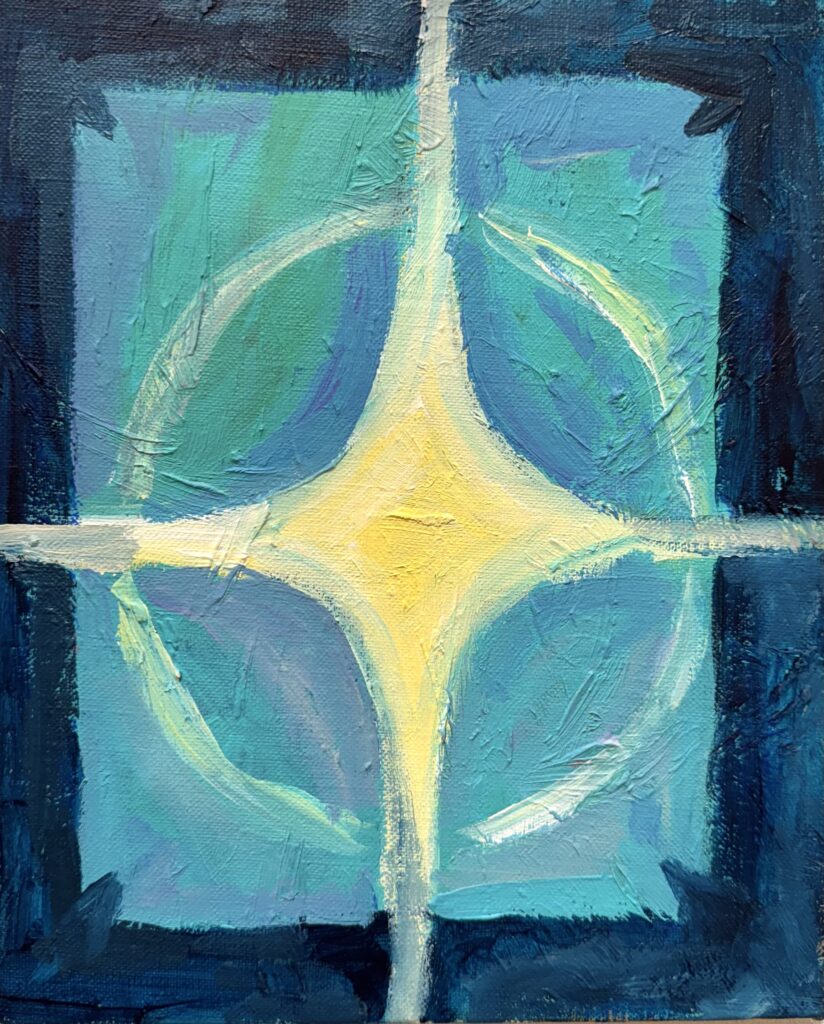
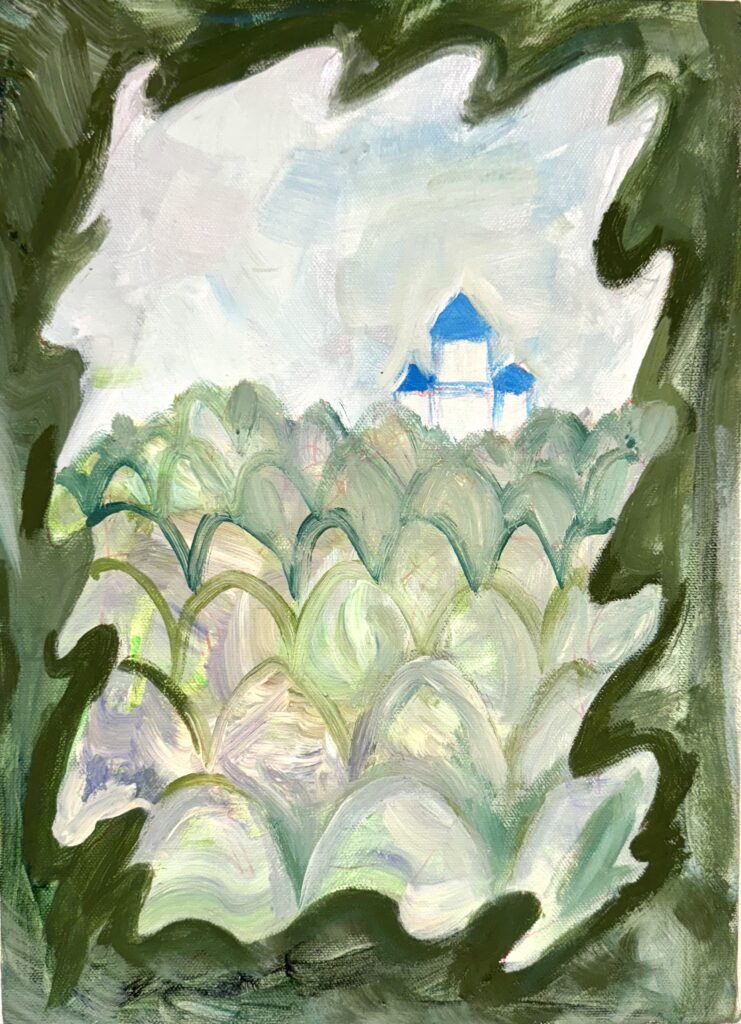
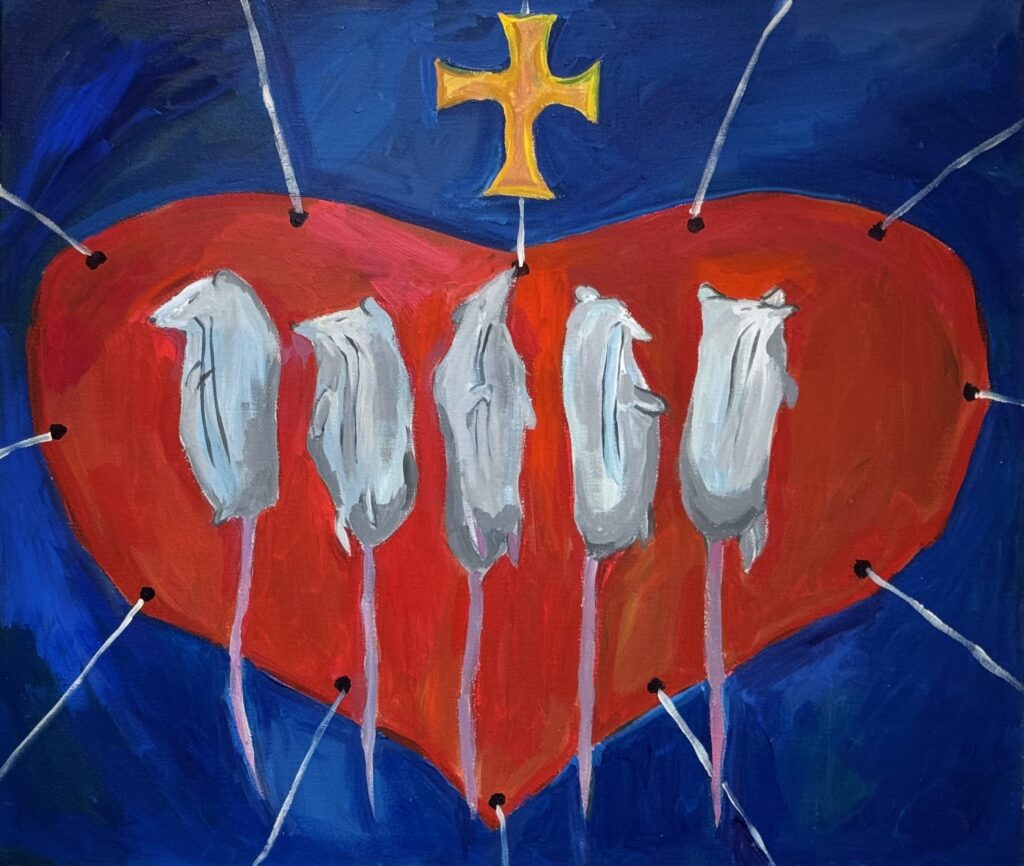
言葉から派生した様々な自分考えを盛り込んで展示や作品作りをしました。
自分は絵画制作の際に、自分の中に感覚的なイメージがあり、いつもそれを描き出して制作しているのですが、今回は、
成り立っていないロジック、二元論の世論、主語の選択により脱落していくアイデンティティなどの、日々考えていることや、自分が学んできた油絵のインプットからくる、自分が描くイメージにも、いつもどこか西洋の面影があること(油絵は西洋美術メインとわたしは思います)、いつも頭の中にあるワームホールやブラックホールのイメージ、などなどいろいろを、自分の頭の中の視覚イメージをいろんなものに変換して描いています。
わたしは歌うのも好きで、英語や韓国語の歌を歌うために語学勉強中です。日本語にはないリズムやニュアンスがすごく楽しいし、いろんな方の翻訳を見たりして、ネイティブスピーカーではないことからくる奥深さや意味の幅の捉え方の揺れみたいなものにいつも感動しています。その楽しさを少しでも感じてもらえるように盛り込んでいます。
展示の私なりの結論みたいなのを一言でいうと、「言語は現実の記号だが、現実は分割できない。また、文法は一方向だから、言語はある程度合理的なことしか記述できない」、みたいな、、現実が三次元、言葉は二次元で、さらに文法を一次元のひものイメージとかけあわせていて、例えば実際に雨が逆さにふるありえないことが起きたとして、その事実を実際に知らなければ、間違った文章に感じる、、というような、またひもであるから絡まる(パラドックスの問題のようなことがおきる?)し、一本のひもは絶対にほどけることとか、抽象的なことを考えたり、わたしたちが合理的な根拠とみなす科学は地球から離れるほど数学になっていくような、、真と疑や正と誤には感覚的な境界があるように感じること、あるとないが同時に存在する、あるいは時間が同時に進んだり遅れたりする、そういったことが起こらないのは人間が3次元(4次元時空)の世界で生きているからだという自分の考えを作品にしました、、、4次元や5次元など、人間が感知できない先が言葉の果て、なのでないけれどそれは確かに存在するともいえます。
I incorporated various personal ideas derived from language into my exhibitions and artwork.
When I create paintings, I usually have a sensory image within me that I strive to bring to life through my work, but this time,
I focused on things like illogical reasoning, binary public opinion, and identities that fade away depending on the choice of subject—as well as the fact that the images I paint always carry a certain Western influence (since I believe oil painting is primarily rooted in Western art), and the images of wormholes and black holes that are always in my mind—I’ve been converting these visual images in my head into various forms and depicting them.
I also love to sing, and I’m currently studying languages so I can sing songs in English and Korean. I really enjoy the rhythms and nuances that don’t exist in Japanese, and when I look at translations by various people, I’m always moved by the depth that comes from not being a native speaker—and the subtle shifts in how the breadth of meaning is interpreted. I incorporate these elements into my work so that viewers can experience even a little bit of that joy.
If I were to sum up my personal conclusion about this exhibition in a single sentence, it would be something like: “Language is a symbol of reality, but reality cannot be divided. Also, since grammar is unidirectional, language can only describe things that are, to a certain extent, rational.” I’m combining the image of reality as three-dimensional, language as two-dimensional, and grammar as a one-dimensional string. For example, if an impossible event like rain falling upside down were to actually occur, unless you actually knew that fact, the sentence would feel incorrect… Also, because it’s a string, it gets tangled (could this lead to paradoxes?), I also contemplated abstract concepts, such as whether a single string can ever be completely untangled, and how science—which we regard as rational evidence—becomes increasingly mathematical the farther we move away from Earth… I felt there is a sensory boundary between truth and doubt, right and wrong; that “existence” and “non-existence” coexist simultaneously; or that time can move forward and backward at the same time. I turned my own idea—that such phenomena do not occur because humans live in a three-dimensional (four-dimensional spacetime) world—into a work of art… Dimensions beyond the human senses—such as the fourth or fifth dimensions—lie at the limits of language; so while they may not exist in the conventional sense, one could also say they certainly do exist.